I want to be clear about something before we start. I do not hate Americans. I have never met an American in person. I am not qualified to comment on what they are like as individuals, in their homes, with their families. I am sure many of them are perfectly decent people.
This article is about the American economic system, American companies, and the American government. It is about the practical reality of what happens when you, as a European consumer, hand your money over to an American corporation. Or when you, as a European company, try to work with American infrastructure. I have arrived at a simple conclusion after years of personal experience and observation: I will not buy American if I can avoid it. Here is why.
The myth of the consumer-friendly American company
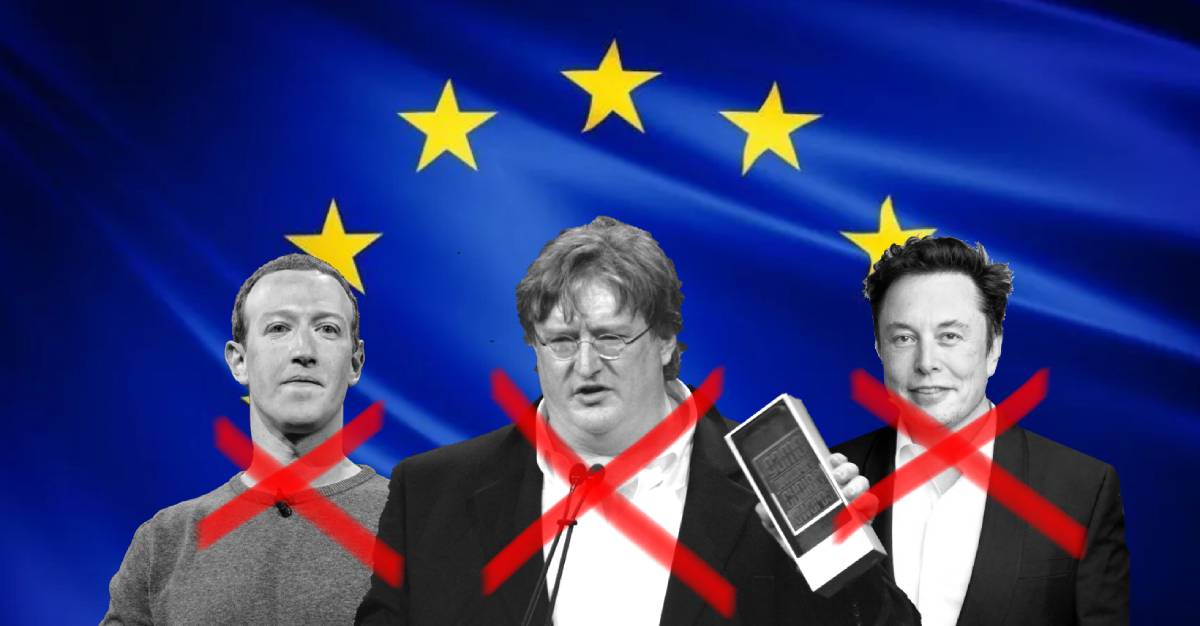
There is a persistent belief among gamers that Valve, the company behind Steam, is different from other corporations. That it is run by good people who care about their customers. That Gabe Newell, its CEO, is the most benevolent monopolist in history, but I don’t think this belief is grounded in reality. Rather, it is grounded in the fact that Steam has good sales and a convenient launcher, where most other DRM is obnoxiously intrusive. People confuse convenience with benevolence.
The clearest example of what Valve is actually like comes from the story of Axel Gembe, a German teenager who hacked into Valve’s servers in 2003 and downloaded the Half-Life 2 source code. Gembe was young, stupid, and living in a small town in Germany called Schönau im Schwarzwald. He did what teenage hackers do: he got into somewhere he should not have been, and he took something he should not have taken. He did not upload the code to the Internet himself. He shared it with one person who assured him he would keep it private, and that person leaked it.
What happened next is what matters. When Gembe realised the severity of what he had done, he emailed Gabe Newell directly. He apologised, took responsibility. He asked, in what we know to be a profound act of idiocy, if Valve might consider giving him a job. Newell wrote back saying “yes”. He arranged a phone interview. He invited Gembe to a second, face-to-face interview at Valve’s headquarters in Seattle.
This was a trap. The phone interview was an FBI operation to obtain an on-the-record confession. The invitation to Seattle was a plan to get a teenage boy onto American soil so that the FBI could arrest him and, almost certainly, ensure he spent the rest of his life in a federal prison. Gabe Newell, the most benevolent monopolist in history, was fully complicit in this plan to trick a teenager into flying across the Atlantic to be destroyed by the American criminal justice system.
The only reason this did not happen is that German police arrested Gembe in his bed on 7th May 2004, before he could board the plane. The police chief told him, “Have you any idea how lucky you are that we got to you before you got on that plane?” Gembe was tried in Germany. He received two years’ probation. The judge cited his rough childhood. Most quaint, no one from Valve even attended the trial. Had he made it to Seattle, he would not have received probation. Americans incarcerate people at a rate five to ten times higher than most European countries.
This is what a “consumer-friendly” American company looks like. This is the company that hundreds of millions of people trust with their game libraries, their payment information, and their personal data. If Valve is willing to entrap a teenage boy to satisfy its sense of vengeance, what exactly do you imagine it would do to you if a dispute arose over your account, your purchases, or your data? The answer is that you would have no power whatsoever. Steam is headquartered in the United States. Any consumer dispute is resolved under American law, in American courts, through American arbitration. European consumer protection agencies have no jurisdiction. You are entirely at the mercy of a corporation that has already demonstrated, beyond any reasonable doubt, what it is willing to do to people who cross it.
How I learnt this lesson personally
I learnt this lesson the hard way, not through a dramatic news story, but through a forty-dollar video game. Not really a game I would like to play today, for reasons of taste that changed over time, but I digress.
VOID Interactive, a developer based in New Zealand, released a game called Ready or Not on Steam. It was advertised as a hyper-realistic tactical shooter, a spiritual successor to the old SWAT 4. The game sold well. It maintained a “very positive” rating on Steam. Then, in 2025, the developers announced six “targeted visual changes” to the PC version in order to secure a release on PlayStation 5 and Xbox Series X/S. Rather than maintain separate builds – which would not have been nearly as challenging as one would think – they applied the changes to all versions.

These shocking images of adolescents in a drawer of a suspected child porn distributor have been changed to be nondescript documents that mean nothing.
The changes were significant. Female hostages who previously appeared nude now wore underwear. A police informant who was nude now wore underwear. Post-mortem dismemberment was disabled entirely. The developers insisted that “the effects of gore and violence have not been toned down” and that the changes were only applied “where absolutely required, and only to the letter of the regulations.” The Steam community disagreed. The game’s recent review rating dropped to “mostly negative.” Over 1,200 comments poured in. The most common sentiment was that any amount of censorship is too much.
I was one of the people who bought the game as it was originally advertised, with many of VOID Interactive employees repeatedly stating on Reddit and Twitter that their artistic vision will not be financially motivated. Of course, once the millions of dollars started flowing in, the artistic vision, indeed, started being financially motivated.
I received a product that was materially different from what I paid for. I bought the game specifically because the developers repeatedly chanted “we will not abandon our artistic vision.” Can I do anything? I tried. The developers are in New Zealand. The platform is American. I am in Europe. Who do I complain to? After coming into contact with the Polish consumer agency, I realised the answer is no one. I can either pursue a legal dispute in the United States, or I can pursue the developer directly in New Zealand. Either option would cost me orders of magnitude more than the forty dollars I lost. I do not have the financial means or the willpower to fight a multinational corporation or a foreign company over a forty-dollar product.
This is the reality of buying from American platforms. When something goes wrong, you have no recourse. The American legal system is not designed to protect foreign consumers, or consumers at all. It is designed to protect American corporations from consumers. The entire system is structured around mandatory arbitration clauses, class action waivers, and jurisdictional barriers that make it effectively impossible for anyone outside the United States to seek redress. The developers of Ready or Not can change the product I paid for, and I can do nothing about it. This is the system working as intended.
A culture that cannot look outward
The problems with American companies do not stop at consumer protection. There is a deeper cultural issue that makes doing business with Americans uniquely frustrating: they are completely oblivious to other cultures.
This is not a personal attack, just a plain documented business reality. The most famous example is Walmart’s catastrophic failure in Germany. Walmart entered the German market in 1997 and left in 2006, having lost billions of dollars. The reasons are instructive:
Walmart attempted to impose American cultural norms on German employees and customers. Store greeters, a staple of American Walmart locations, were met with confusion and discomfort by German shoppers, who generally do not want to be accosted by a stranger the moment they walk into a shop. The company’s mandated morning cheer, where employees are required to chant company slogans before their shift, was viewed by German workers as bizarre and degrading. Walmart’s policy of banning workplace romances was struck down by German courts as an illegal infringement on personal privacy. The company’s attempt to bag customers’ groceries was rejected because Germans prefer to bag their own items at their own pace.
The deeper issue was that Walmart never seriously tried to understand the German market before entering it. The company assumed that what worked in Arkansas would work in Berlin. When it did not, Walmart blamed the market rather than its own inflexibility, going so far as to try to bust unions. This is not an isolated incident. It is a pattern. American companies consistently enter foreign markets with the assumption that their way of doing things is the only way, and that foreigners will simply adapt. When they do not adapt, the Americans leave, blaming the foreigners for being difficult.
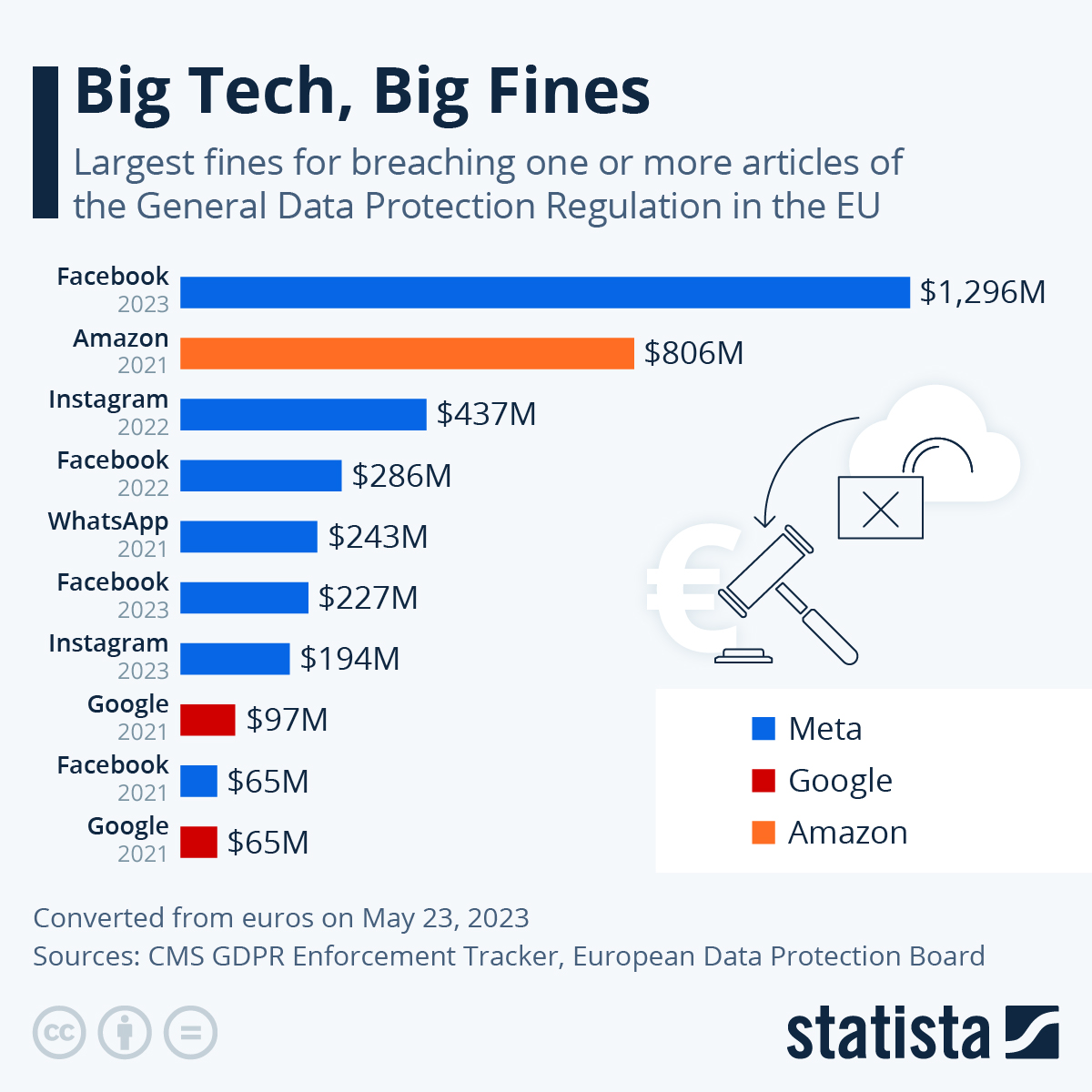
This pattern extends far beyond retail. It is visible in how American technology companies treat international users. Google, Apple, Microsoft, and Meta all operate under the assumption that American cultural norms, American free speech standards, and American legal frameworks should apply everywhere. They are consistently surprised when European regulators push back. They are surprised that Germans care about privacy. They are surprised that the French care about language preservation. They are surprised that Poles care about sovereignty. Every single time, they react as if these concerns are irrational novelties, rather than deeply held cultural values that predate the United States itself.
I want to stress that this is strictly about the business world. I do not know what Americans are like in person. I am not commenting on that, but, in business, the American approach is one of exceptionalism rather than partnership. It is the assumption that the American way is the correct way, and that everyone else should simply fall in line. When you buy American, you are not entering a partnership, but accepting a set of terms written by people who do not understand, and do not care to understand, where you come from.
The economy that refuses to compete
There is a deep irony at the heart of American economic rhetoric. The United States presents itself to the world as the champion of free trade and open markets. This is simply untrue. The American economy is one of the most closed and protectionist on the planet, and it has been for a century, if not longer.
Consider the Chicken Tax. In 1964, President Lyndon Johnson imposed a 25% tariff on imported light trucks, as retaliation for European tariffs on American chicken exports. The tariff was nearly ten times the average American tariff at the time. It was supposed to be temporary. Sixty-two years later, it is still in effect. The result is that superior European trucks, and excellent vehicles from the rest of the world, are effectively banned from the American market. A European-made truck that might cost 80,000 euros suddenly costs 100,000 euros after the tariff alone, before shipping, before dealer markup, before anything else. It is simply not competitive.
Then there is the Merchant Marine Act of 1920, better known as the Jones Act. This law requires that all goods transported by water between American ports must be carried on ships that are American-built, American-flagged, American-owned, and American-crewed. This means that a ship carrying cargo from Florida to Puerto Rico cannot be a modern, efficient, foreign-built vessel crewed by experienced international sailors. It must be an American ship, built in an American shipyard, operated by American citizens. The result is that shipping between American ports costs vastly more than it should. The Federal Reserve Bank of New York has indicated that the Jones Act may hinder economic development in Puerto Rico. In 2018, the northeastern United States imported liquefied natural gas from Russia because no Jones Act-compliant LNG tankers existed. The United States, the world’s largest producer of natural gas, imported gas from Russia because its own protectionist laws made domestic transport impossible.
The Buy American Act of 1933 requires the federal government to prefer American-made products in its purchases, even when domestic products are up to 25% more expensive. The Berry Amendment of 1941 requires the Department of Defence to buy only American-made food, clothing, and specialty metals. Section 301 tariffs on Chinese goods, imposed in 2018 and expanded repeatedly since, apply 7.5% to 100% tariffs on over 25,000 categories of products. Section 232 tariffs impose 50% duties on steel and aluminium. A 10% global reciprocal tariff was imposed in February 2026.
There’s way more than what was just listed, but it should be clear that the total effect is staggering. American consumers and businesses pay artificially inflated prices for almost everything. Foreign companies are locked out of American markets not because their products are inferior, but because the American government has erected a wall of tariffs, quotas, and regulatory barriers that makes competition impossible. Yet, simultaneously, American politicians lecture the rest of the world about the virtues of free trade. The hypocrisy would be amusing if it were not so damaging, or so horrendously disrespectful. I will practise my free will and freely choose not to trade with such a greedy partner.
When the government steps in
If the economic protectionism were not enough, there is a more disturbing development: the American government is now willing to shut down critical infrastructure on a whim, with no transparency, no due process, and no regard for the consequences outside or even within its borders.
In June 2026, the US government issued an export control directive ordering Anthropic to suspend all access to its Fable 5 and Mythos 5 AI models for all customers worldwide. Not just customers in sanctioned countries. All customers. The directive cited national security authorities. It was delivered at 17:21 (local time) on a Thursday. Anthropic was given no specific details of the national security concern. The best Anthropic could determine was that the government believed it had become aware of a method of “jailbreaking” Fable 5, and that the vulnerabilities identified were minor, previously known, and achievable with other publicly available models.
The directive forced Anthropic – and therefore all of its customers – to abruptly lose access to AI models that businesses, researchers, and individuals around the world had come to depend on. Access was cut off for everyone. There was no warning. There was no transition period. There was no explanation.
Anthropic’s own statement on the matter is worth quoting directly, because it is remarkable for a major American corporation to push back this strongly against its own government:
“If this standard was applied across the industry, we believe it would essentially halt all new model deployments for all frontier model providers… We believe the government should have the ability to block unsafe deployments, as part of a statutory process that is transparent, fair, clear, and grounded in technical facts. This action does not adhere to those principles.”
The French president remarked that the US economy is too interventionist, calling into question the reliability of American infrastructure at a G7 meeting. He is correct, even if it’s coming from someone French. When you depend on American cloud services, American AI models, or American software platforms, you are not just paying for a product. You are accepting that the American government can, at any moment, and without explanation, order that product to be taken away from you. It does not matter where you live. It does not matter what you paid. It does not matter how dependent your business or your research is on that infrastructure. One directive from Washington, and it is gone.
This is not a theoretical concern. It has already happened! If you are running a business in Poland, or Germany, or France, and you have built your operations around American AI services, you have just been given a very expensive lesson in what American partnership actually means. It means you have no rights. It means you have no recourse, because you are not a partner at all. You are a tenant, and your landlord can evict you at any time, for any reason, or for no reason at all. That’s what it really means to be a “trade partner” with the US. That is, it is no partnership at all.
The alternative
The natural question is: if not America, then who? Let me be clear about my order of preference. I buy European first. When no European alternative exists, I look to China. Only then do I consider America, and at that point, I usually simply do not buy the product at all. America is the partner of last resort, and I have not reached that resort in years.
This is not a statement I make lightly. I am a Pole, standing alongside my European brethren. I am well aware of the political situation in China, so I am not celebrating the Chinese government, but in terms of economic partnership, trade reliability, and technological openness, China is simply a better partner than the United States at this point in history.
Consider the trade relationship. The United States has engaged in a series of escalating trade wars over the past decade. Tariffs on Chinese goods have been raised repeatedly, often for reasons that have nothing to do with Chinese behaviour and everything to do with American domestic politics. China, by contrast, has not initiated trade wars against Europe. It has not imposed punitive tariffs on European goods as a negotiating tactic. It has not threatened to invade Greenland or Denmark. The Chinese approach to trade is, comparatively, stable and predictable. You may not like the Chinese government, but you can rely on the fact that a trade agreement signed with Beijing today will still be honoured next year. The same cannot be said of Washington.
Consider artificial intelligence. DeepSeek, a Chinese AI company, has released open-weight models that match or exceed the capabilities of the best American frontier models, while being 8 to 30 times cheaper to run. These models are genuinely open. You can download them. You can run them on your own hardware. You can study how they work. You can build on them. They cannot be taken away from you by a government directive, because they run on your machines, not on an American server farm. Anthropic, OpenAI, Google, and the rest of the American AI industry do not provide this. Their models are closed and their weights are proprietary.
The Chinese AI industry is approximately three to six months behind the American frontier, but that gap is closing, maybe even already be closed in some areas. But even if it were a full year behind, the fundamental difference remains: Chinese AI is something you can own, control, and depend on. American AI is something you rent at the pleasure of the US Department of Commerce, which can one day just decide to unplug it if it deems it “too risky to export”.
The broader trade picture tells the same story. While American automobiles are protected behind the Chicken Tax, Chinese electric vehicles are available, affordable, and technologically competitive. While American shipping is crippled by the Jones Act, Chinese ports are the busiest in the world, handling more cargo than any other nation’s. While American companies demand that the world adapt to their way of doing business, Chinese companies adapt to local markets, local regulations, and local cultures. The result is that China is now the largest trading partner for most of the world. This is not an accident. It is the consequence of being reliable and actually having open trade, which the US does not practise in any meaningful way.
Conclusion
I do not buy American because it makes no sense to do so. American companies do not respect their customers. American consumer protection does not extend to foreigners. American business culture is inflexible and oblivious to the world outside its borders. The American economy is one of the most protectionist on the planet, hiding behind tariffs and regulations while preaching free trade to everyone else. The American government has demonstrated that it will shut down critical infrastructure on a whim, without warning, without explanation, and without regard for the consequences beyond the doorstep of the White House.
The Chinese are not saints. No major power is, but they are reliable. They do not start trade wars. They release open-source AI models. They sell products that are competitively priced and do not come with the constant threat of being arbitrarily cut off by a government agency you have never heard of. As a European consumer, my loyalty is not to any flag. It is to whoever provides the best product at the best price with the most reliable terms. My first choice is always European. When Europe cannot provide, I turn to China. Only if both fail do I even look at American products, and at that point I usually conclude that the product is not worth the risk.
If American companies want my business, they need to earn it. They need to offer real consumer protection that applies to everyone, not just Americans. They need to respect local cultures instead of imposing their own. They need to compete fairly instead of hiding behind tariffs. And the American government needs to demonstrate that it can be trusted not to pull the plug on the infrastructure that the world depends on. Until any of that happens, I will buy elsewhere.
This is not about contempt. It is about frustration. I am frustrated that a nation with so much potential, so much talent, and so much wealth has chosen to be closed, inflexible, and unpleasant to deal with. I am frustrated that the self-proclaimed leader of the free world treats its partners like subjects. USA could be a good partner, but it simply chooses not to be. Until that changes, my money goes to Europe first, then to China. American business gets nothing until they get their house in order.