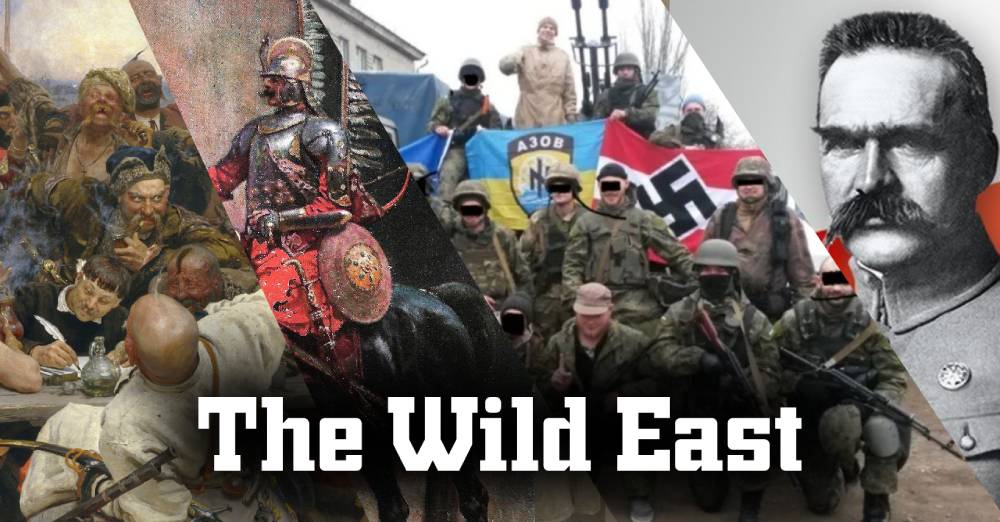
On 26th May 2026, Poland’s head of state cabinet blasts Zelensky for honouring a WWII unit by naming one of his units currently engaged on the Russian front after “Heroes of UPA”. The WWII unit in question is UPA, or the Ukrainian Insurgent Army. More details will be provided later in the article, but here is the primer: UPA is a Nazi-aligned group that was responsible for the barbaric murder and torture of some 100,000 Polish civilians in 1943-45.
This has ultimately led to outrage that has culminated in Polish President Karol Nawrocki rescinding the Order of the White Eagle from Volodymyr Zelensky. This is the highest honour that the nation-state of Poland can give. It was granted to Zelensky by former Polish President Andrzej Duda in October 2022. The Ukrainian government was given a three-weeks’ notice about the recension, in order to allow Zelensky to correct his mistake. Instead of determining that perhaps he made a diplomatic or even moral mistake, he has doubled down by sending the order back to the Presidential Palace via regular consumer courier, Nova Post.
This is how all hell broke loose, leading us to where we are now. Anti-Polonism is rising in Ukraine, and Poles on the general are becoming increasingly tired of supporting Ukraine, because they view all of this a stab in the back. Each day since then, the Ukrainian government has, in one capacity or another, further doubled down on this act, which Poles perceive as the knife going deeper and deeper into their back.
Poland is the largest deliverer of aid to Ukraine compared to its economy size, and was the first nation to react with decisive action after the 2022 invasion. Poland has also accepted over 1,000,000 refugees since that time, likely even more if one counts undocumented migrants; 2,000,000-3,000,000.
It is no wonder, then, that the Polish people have reacted strongly to what some westerners might view as a grotesque, but ultimately – for the lack of a better word – “inconsequential” dispute.
History is just history, right? Well, not quite. Although Europeans share a lot of characteristics across all their culturally diverse countries, there’s a reason why “Western Europe” and “Eastern Europe” is a dominant geopolitical distinction. It is so obvious to most people that it is a natural reflex when talking about geopolitics, but this time it is important to really think about what that means.
For this reason, I am writing this article, so that it can serve as an introduction to western people unaware of the massive history of Eastern Europe. After reading this article you, the western friend, should be able to better understand what Poland and Ukraine actually are as nation-states.
Disclaimer
I am not university-accredited, whether in politics, history, or any other kind of topic. I am just a Polish man who wishes to inform the western public about the reality of Eastern Europe. Because of this, it is important to establish what this article is and isn’t:
- The article is not a comprehensive breakdown of all of history. Rather, the article should serve as a good starting point for topics to research. Found a keyword or event you’re not familiar with? Look it up and make up your own opinion. This article is meant to stimulate thoughts, not stifle them.
- The article is not supposed to be academic. Some general or vague statements might be made that require trusting that I am doing all of this in good faith. If in doubt, then, as stated above, do original research.
- The article is not a hitpiece on Ukraine or its people. Poles and Ukrainians have lived in relative harmony for centuries, with this arrangement changing only in the last 80 years.
The Polish-Lithuanian Commonwealth
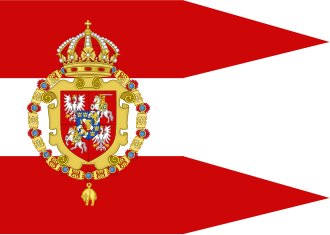
In order to to begin understanding Poland, one has to first understand that Poland was throughout the 16th, 17th, and 18th centuries a superpower. Founded in 1569 as a merger with Lithuania, the Commonwealth rapidly expanded to eventually encompass territories that today are multiple independent nations.
Just to give an idea of how powerful the Commonwealth was: it was able to temporarily capture Moscow in 1610. Liberation of Russia from Polish occupation is celebrated 4th November every year in Russia, known as Unity Day. Indeed, the Commonwealth was a tremendously powerful nation-state that shaped a substantial portion of European history. In 1683, during the Battle of Vienna, it repelled the largest Ottoman incursion into Europe that likely saved it from Islam. Europeans generally do not give enough credit to us for this.
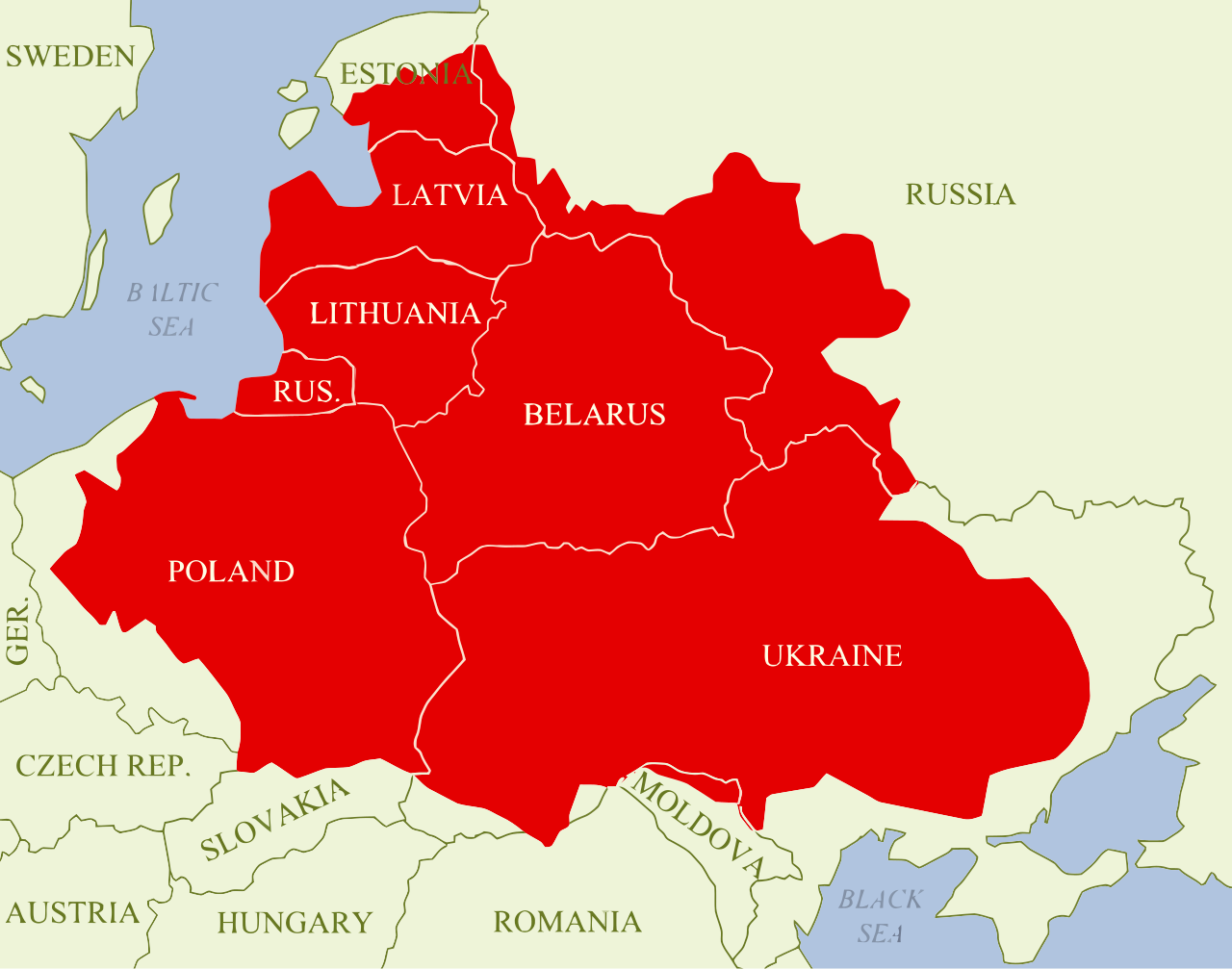
Map showing the Polish–Lithuanian Commonwealth at its maximum extent following the Truce of Deulino, superimposed on present-day national borders. Red is all of the territory that was ruled by Zygmunt III Waza in 1619.
From looking at the above map, it should be clear why it is worthwhile to start learning about Eastern Europe with the Polish-Lithuanian Commonwealth. The entirety of Belarus previously used to be the Commonwealth. Two of the three Baltic States were entirely in the Commonwealth. Most importantly, almost all of what is today’s Ukraine used to be under the territory of the Commonwealth.
Considering this is the arrangement the region was under for roughly two centuries, it stands to reason that a complicated history between the peoples living in today’s Ukraine and Belarus was formed. So, then, what was Commonwealth like? This is probably the most obvious question. Were Ukrainians minorities? What was happening to Belorussian subjects under Commonwealth rule?
To put it quite bluntly, there were no Ukrainians or Belorussians at the time, but fear not: this is something that will be explored in more detail later.
Regardless, whoever these people were, whatever one might call them, they were still people, and Commonwealth rule over them would ultimately determine how the descendants of those people would perceive them in their history books. So what was it?
Elective monarchy
Starting from the top, meaning the form of governance, the Polish-Lithuanian Commonwealth adopted a system of elective monarchy. As the name suggests, this was a system in which the monarch was elected. By whom? Well, the nobles. It was a primitive system of voting. There were no ballot boxes. Instead, a representative of the government would stand in a town square and ask nobles to yell out whoever they wanted to be the monarch. Whichever crowd of nobles drowned out all the other voices was the vote. Considering that nobles made up 8-10% of the population, compared to just 1-2% in other European countries, this was not as elitist as one would expect.
That being said, it was a highly unusual form of governance at the time. It wasn’t unique, as the Kingdom of Denmark also had something similar. Nevertheless, the Commonwealth was, in the global scale, an overwhelming minority of countries that was run this way.
Even more unusual was that the monarchs did not even have to originate from Polish dynasties. Monarchs of foreign dynasties regularly stood for election in Poland and people did vote for those monarchs on multiple occasions.
In fact, part of the reason why Warsaw is today’s capital of Poland is because King Sigismund III Vasa wanted the capital to be closer to the Swedish court, where he came from. Again, this is a highly unusual form of governance. It would be unthinkable for the English or French courts to let foreigners run their country or impede on an established dynasty’s interests.
Sejm
The word “commonwealth” in the context of the Polish-Lithuanian Commonwealth is a literal translation of the word “rzeczpospolita,” as in “Rzeczpospolita Polska,” or the Polish Republic. Similarly, the word “republic” comes from Latin “res publica,” which means “commonwealth.” Even more literally, all of these words mean “common thing”: a thing that is shared by everyone. Understanding this term is essential, because it by itself describes how the Polish-Lithuanian Commonwealth operated. It is also why the Polish-Lithuanian Commonwealth is considered to be “Pierwsza Rzeczpospolita,” or the First Republic, even though it was a monarchy.
With that being said, much like other monarchies in Europe at the time of the Commonwealth, the Commonwealth did have a parliament, called the Sejm. Unlike in other monarchies at the time, the Sejm had a lot of power and influence in the country. It was not a totalitarian empire ruled by the iron fist of a king. One could call it “noble democracy.” The Sejm was comprised of the “szlachta” (the nobility), who fiercely protected what they called their Golden Liberty. The king could not levy taxes, declare war, or pass laws without the Sejm’s approval.
At its peak, any single noble in the Sejm could shout “Liberum veto!” (I freely forbid) and instantly halt the legislation, nullifying all decisions made during that parliamentary session. To a westerner accustomed to centralised absolute monarchies like France or England, this level of decentralisation and extreme liberty is almost unimaginable. It was an incredibly progressive system that prevented tyranny, but it also sowed the seeds of the Commonwealth’s eventual inability to govern its vast, untamed eastern territories.
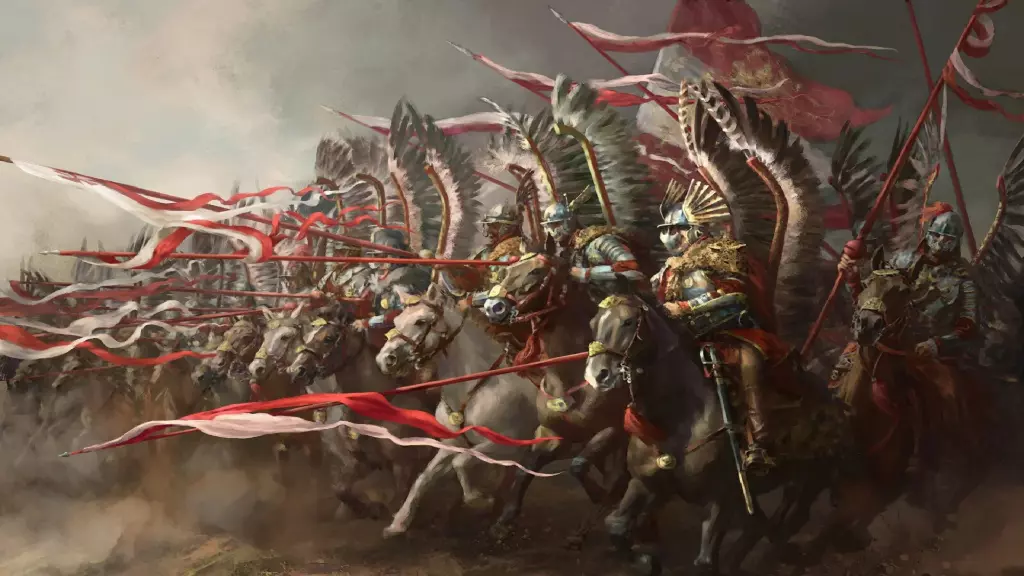
The proto-Ukrainians
If you look at the southeastern expanse of the Commonwealth’s map, the area covering modern-day central and eastern Ukraine, you will find a region historically known as the “Dzikie Pola,” or the Wild Fields. The name Ukraine itself actually means “borderlands,” because they were the eastern frontier of the Commonwealth. They were the Wild Fields, to the point they named their country after this concept.
To understand the Wild Fields, a western friend could think of the American Wild West. It was a vast, fertile, but highly dangerous frontier. It was nominally under the control of the Polish Crown, but the Sejm’s laws carried very little weight out there.
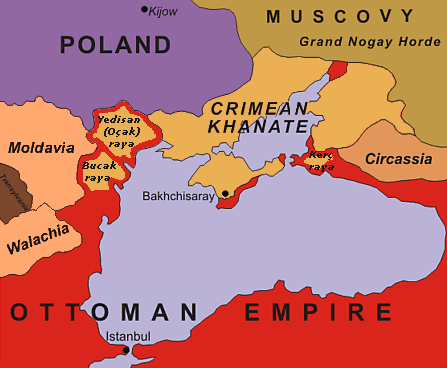
Map showing the Crimean Khanate in ca. 1600.
Why was it dangerous? Because just south of the Wild Fields lay the Crimean Khanate, a vassal state of the Ottoman Empire populated by the Tatars. For centuries, Tatar raiding parties would sweep north into the Wild Fields and the broader Commonwealth to capture slaves, a practice designed to expand the growing Janissary army. Hundreds of thousands of people from these lands were abducted and sold in the slave markets of the Ottoman Empire over the centuries. The Crimean Khanate was the last Muslim nation-state in Europe, but it was not abandoning its Jihad any time soon.
To survive in this brutal environment, a unique warrior culture emerged: the Cossacks.
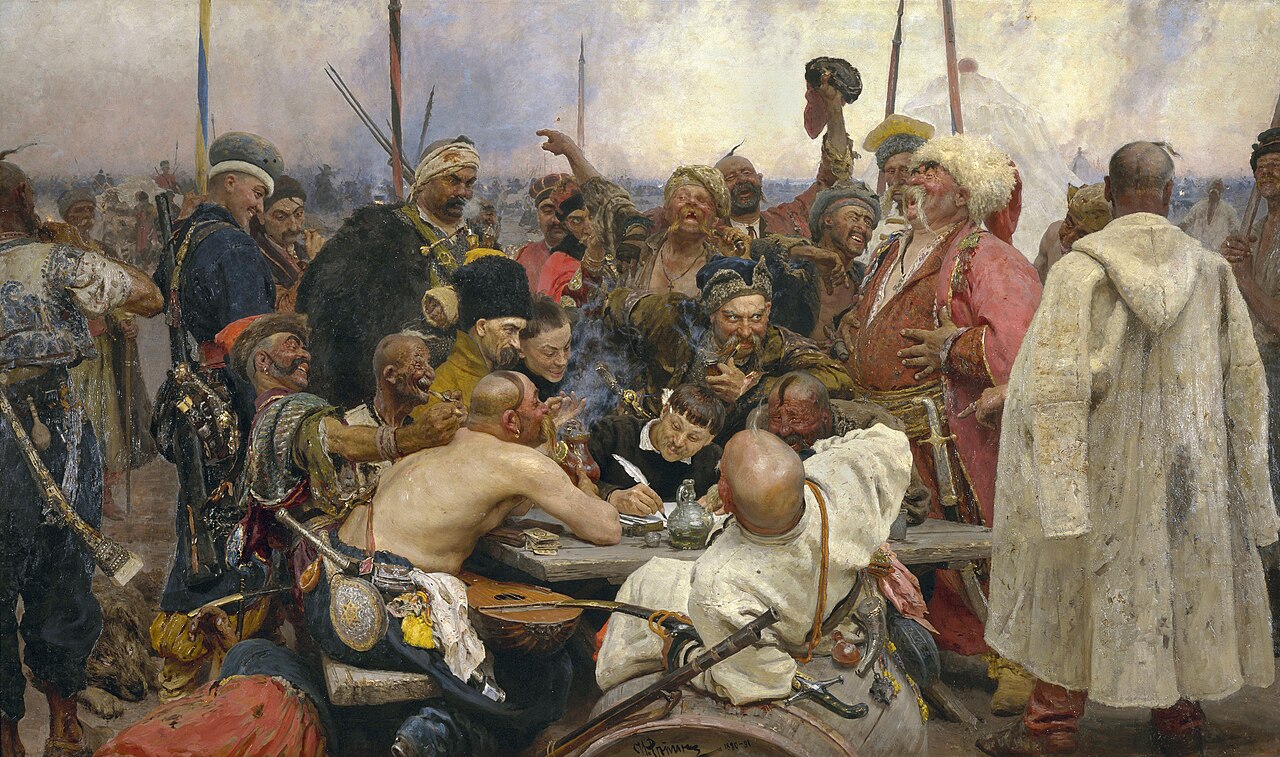
The Cossacks were not an ethnic group in the modern sense. They were a diverse mix of runaway serfs escaping oppressive Polish landlords, adventurers, mercenaries, and local Orthodox Ruthenians (the ancestors of modern Ukrainians and Belorussians). There even is a TRPG about this. They established self-governing, highly militarised democratic communities along the Dnieper River. They became masters of steppe warfare, serving as a vital buffer that protected the Polish-Lithuanian Commonwealth from Tatar and Ottoman invasions.
Thorn in Commonwealth’s side
The Cossacks shed their blood to defend the Commonwealth, and in return, they wanted to be treated as equals. They wanted the same rights as the Polish and Lithuanian nobility. They proposed turning the dual state into a tripartite state: a Polish-Lithuanian-Ruthenian Commonwealth, as described in the Treaty of Hadiach.
However, the Polish magnates in the Sejm, blinded by their own privilege and viewing the Cossacks as little more than rebellious peasants, repeatedly denied them these rights. Instead of integrating them, Polish magnates tried to turn the Cossacks into serfs to work their massive agricultural estates in the east.
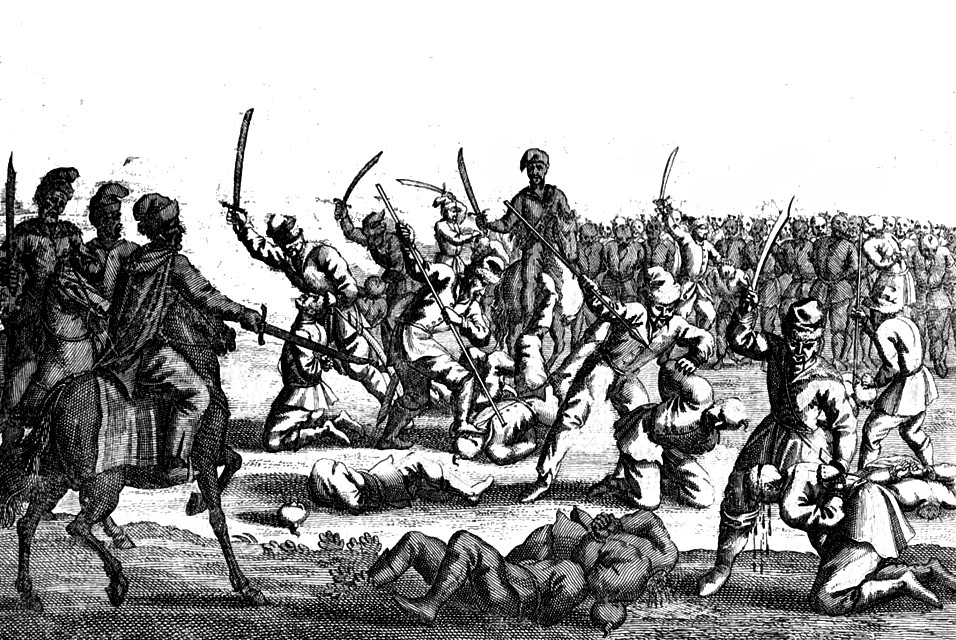
The result was catastrophic. In 1648, a brilliant and in equal measure ruthless Cossack leader named Bohdan Khmelnytsky launched a massive uprising against the Polish Crown. The Khmelnytsky Uprising was unimaginably bloody, turning the Wild Fields into a slaughterhouse. Polish nobles, Catholic priests, and Jewish communities were massacred by the Cossacks, while Polish armies retaliated with equal brutality. Even the Jews consider the uprising to be the worst event since the destruction of the Solomon Temple. If you read what happened during the Volhynia Massacre (more on that later), this was the blueprint for that massacre.
Unable to defeat Poland alone, Khmelnytsky made a fateful decision in 1654: he signed the Treaty of Pereyaslav, swearing allegiance to the Tsardom of Russia in exchange for military aid.
This was the turning point in which the Cossacks essentially invited the Russian Empire into the region. Russia eventually betrayed the Cossacks, stripping them of their autonomy, crushing their culture, and partitioning their lands with Poland, but the damage was done.
The people of the Wild Fields, meaning the Ruthenians and the Cossacks, never got their equal stake in the Commonwealth, and they were subsequently suffocated by the Russian Empire. This deep, generational desire for a sovereign state, forged in a constant struggle against both Polish landlords to the west and Russian tsars to the east, is the anvil upon which the modern Ukrainian national identity was hammered out. Hopefully the image should become a little bit clearer now, for the western audience.
In general, the Cossacks in Poland are viewed as an unwashed horde of barbarians and possibly the biggest political failure in Polish history. Basically, we don’t like Cossacks. By extension this can (but does not have to) mean generally not liking Ukrainians, but more on that later.
As a matter of fact, the Poles and Turks were not ontological enemies, destined to fight each other until the heat death of the universe. Instead, there were multiple attempts at establishing alliances, since the Russian Tsardom and Habsburg dynasty were growing considerably threatening to both Commonwealth and the Ottoman Empire. It would have been successful, if not for Cossacks constantly raiding Turkish coasts and raping their women. The Khmelnytsky Uprising was the last nail in the coffin that sealed any further possibility of diplomacy between the Ottoman Empire and the Commonwealth. This is the level of political failure we are talking about.
Out of ashes: Ukraine
With the Cossacks absorbed and subjugated by the Russian Empire, one might think the story of an independent Ukraine ends there. However, the history of Eastern Europe is not that simple.
To understand how modern Ukraine came to be, we have to fast forward to the late 18th century. By 1795, the Polish-Lithuanian Commonwealth, weakened by internal political gridlock (remember “Liberum veto?”) and devastating wars, was completely wiped off the map. It was partitioned by three growing empires: Russia, Prussia, and Austria. As such, Poland ceased to exist for 123 years.
During this time, both Poles and the ancestors of modern Ukrainians found themselves as stateless peoples living under the boot of foreign emperors, mostly the Austrians and Russians. It was during the 19th century, during a period known across Europe as the “Spring of Nations”, that the concept of modern nationalism was born. All over the continent, ethnic groups were realising they shared a common language, culture, and history, and began demanding their own sovereign states. The Norwegians realised that fjords are Norway. The Italians realised that all people on the peninsula had Rome in common. The Germans realised that Germany is the land of the people (that’s what the word “Germany” actually means, funnily enough).
For the people of the Wild Fields, this was a crucial turning point. The intelligentsia realised that if they continued to call themselves “Ruthenians,” they risked being culturally absorbed by the “Great Russians” to the east or the Polish nobility that still held significant cultural and economic power in the Austrian partition (Galicia).
To forge a completely distinct identity, they adopted the name “Ukrainians,” or the people of the borderlands. Led by poets, writers, and historians like Taras Shevchenko, they standardised their language and romanticised the history of the Cossacks. The Cossacks, who are remembered by us as barbaric rebels, were elevated by this new movement to the status of ultimate national heroes and freedom fighters. Right from the outset it should be clear how this was going to generate friction between the upcoming Ukrainians and Poles.
The aftermath of World War I
When World War I ended in 1918, the Russian, Austro-Hungarian, and German empires collapsed. Suddenly, there was a massive power vacuum in Eastern Europe, and everyone made a desperate dash for independence.
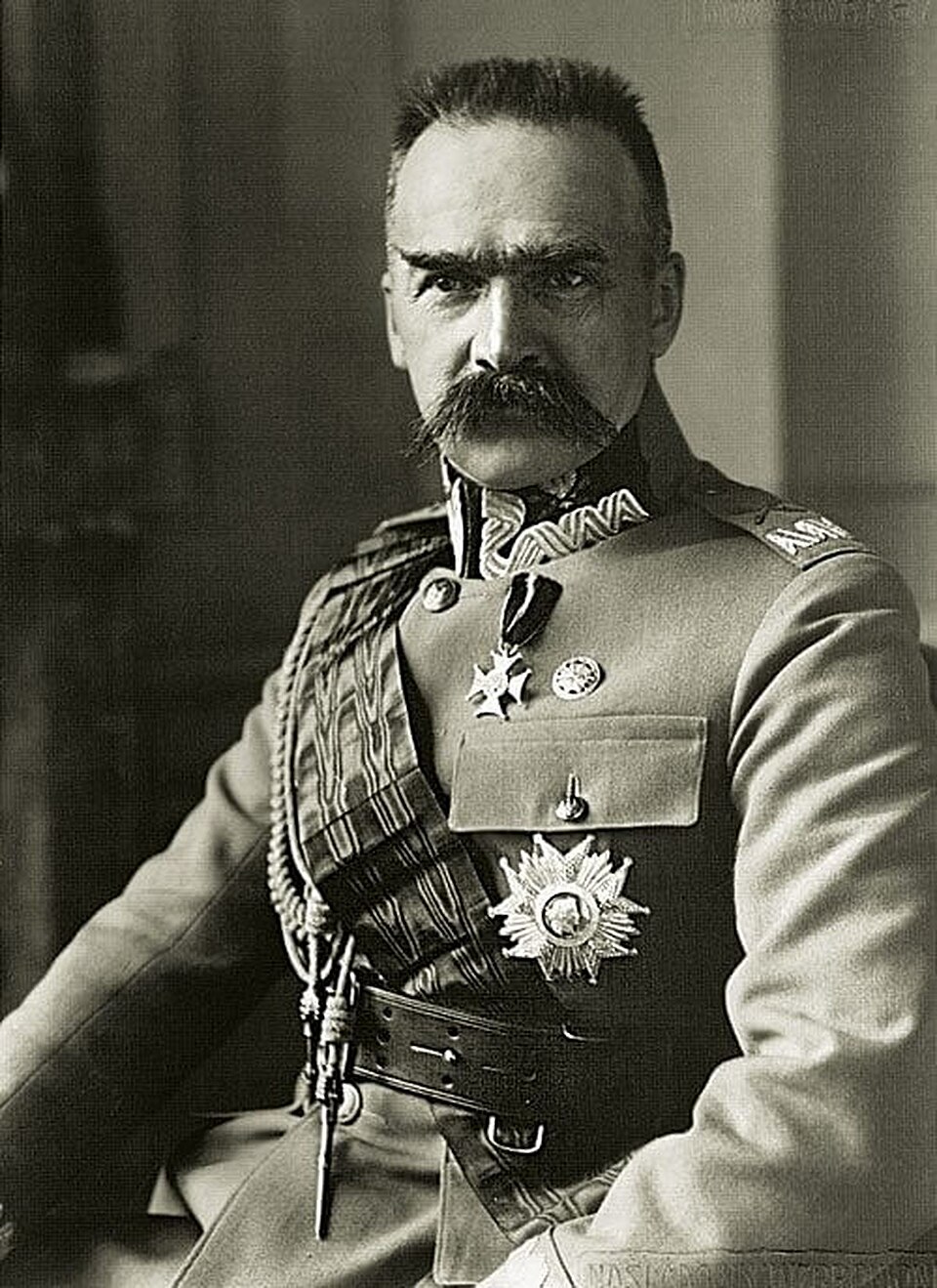
Józef Piłsudski, Marshal of Poland. Piłsudski is our hero, even though he is highly polarising and controversial. He is also subject to many rifts between Poland and Ukraine, which will be explored later.
Poland, led by Józef Piłsudski, miraculously managed to fight off its neighbours and establish the Second Polish Republic. The Ukrainians tried to do the exact same thing, forming the Ukrainian People’s Republic.
At first, there was a genuine glimmer of hope for cooperation. Piłsudski was a visionary who acutely understood the fatal flaw of the old Polish-Lithuanian Commonwealth. He knew that the historical failure to treat the Ruthenians (Ukrainians) as equals is what doomed the region to Russian domination. Therefore, Piłsudski did not want an imperialist Poland packed with hostile, warring minorities. Instead, he envisioned a grand geopolitical project called the “Międzymorze”, or Intermarium: a powerful confederation of independent Polish, Ukrainian, Lithuanian, and Belorussian states that would permanently keep Russian imperialism at bay. In fact, Piłsudski and his colleagues over the course of two decades have developed an entire political alliance system called “Prometeizm,” or Prometheism. Unfortunately it was suffocated by the Axis and Comintern, but it is a rabbit hole worth going down to understand the sheer genius and tenacity at work in the Interwar period.
Anyway, to have any hope of seeing a brighter future, Poland and the Ukrainian People’s Republic formed a desperate military alliance in 1920 to fight off the invading Soviet Bolsheviks. They fought side-by-side, but history had other plans.
When the Polish-Bolshevik War ended in 1921 with the Peace of Riga, the treaty negotiations were heavily influenced by Piłsudski’s political rivals: the National Democrats. They preferred outright territorial annexation over a federation of equals. The new borders were drawn in a way that essentially carved up Ukraine and Belarus between Poland and the Soviet Union.
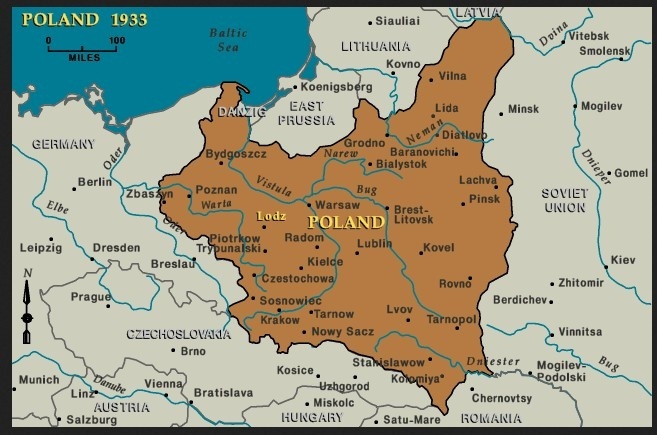
To a western observer looking at a map, Poland’s victory over the Bolsheviks might look like a massive triumph; a miracle, even. Piłsudski, however, actually viewed the political outcome as a nearly complete failure. Millions of Ukrainians and Belorussians were forced into the borders of the new Polish state against their will. This fractured the country along ethnic lines, creating the exact kind of internal ethnic strife that ruined the First Republic centuries prior. In Piłsudski’s mind, they built a ticking time bomb and the only hope of surviving was finding a way to defuse it. His outlook was overall pretty grim.
Piłsudski was so devastated by this betrayal of his geopolitical vision and of his Ukrainian allies that he later visited the interned Ukrainian soldiers who had fought alongside him. He stood before them and famously said, “Gentlemen, I deeply apologise to you. I am deeply sorry, things were not supposed to turn out this way.”
He knew that repeating the Commonwealth’s mistake of subjugating the eastern ethnicities would eventually bring ruin. Unfortunately, he was right. The worst part is that it does not even seem like the Ukrainian public is generally aware of Piłsudski’s charity towards their cause at the time, which will make later parts of this article all the more saddening.
The Interwar crucible
This brings us to the 1920s and 1930s, the crucial decades right before World War II. During this time, the lands inhabited by Ukrainians were split. The vast majority of Ukrainians lived in the Soviet Union (the Ukrainian SSR), while a significant minority lived in the eastern territories of the newly resurrected Polish state, most critically the regions of Galicia and Volhynia.
Life for Ukrainians in both places was difficult, but in entirely different ways:
- In the Soviet Union: Ukrainians faced literal extermination. In the early 1930s, Joseph Stalin engineered a man-made terror famine known as the Holodomor, which starved an estimated 3.5 to 6 million Ukrainians to death. It was a calculated genocide designed to break the back of Ukrainian resistance to Soviet collectivisation.
- In Poland: While not facing physical extermination, Ukrainians were treated as second-class citizens. The Polish government, paranoid about losing its newly regained independence, enacted harsh policies of “Polonisation.” Ukrainian schools were closed, Orthodox churches were destroyed or seized, and Ukrainian political representation was heavily suppressed. In Galicia and Volhynia, in the late 1930s, similar things happened to what Israel does today in the West Bank. It was not pretty. In fact, my parish prays to the martyrs of Chełm and Podlasie, who have been martyred during this period.
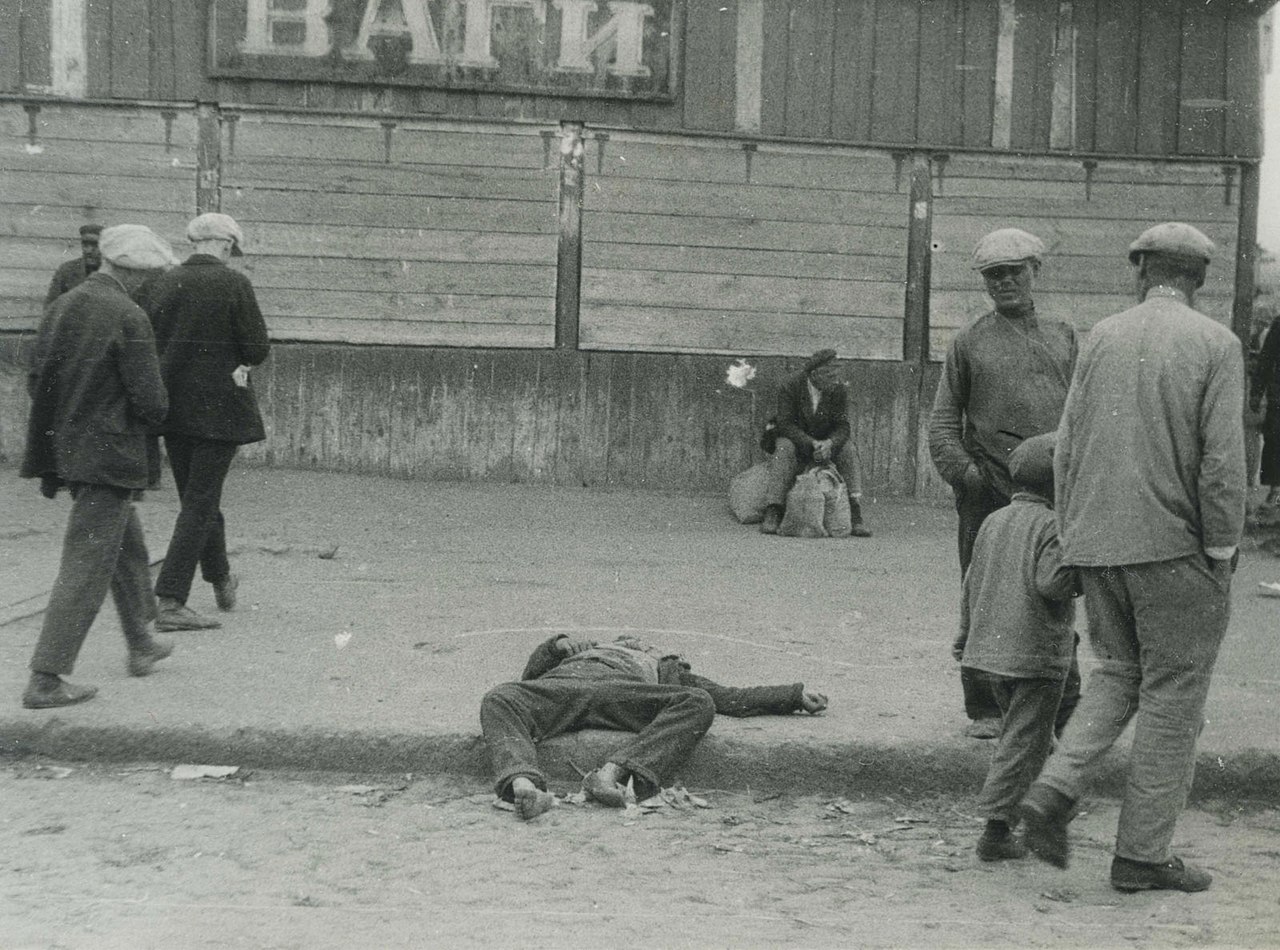
What happened to Ukrainians during Holodomor. Shown in this photo are passers-by and the corpse of a starved man on a street in Kharkiv (1932).
Further in Poland: when Ukrainian and Belorussian minorities, frustrated by having no state to call their own, began stirring up rebellion, the Polish state’s response was brutal and uncompromising. Driven by a cold, calculated political necessity to maintain order in a fragile new nation, Piłsudski’s regime cracked down hard.
Recognising that democratic avenues were closed to the Ukrainians, these groups resorted to a campaign of sabotage, arson, and high-profile terrorism. They carried out political assassinations against Polish officials, and even attempted to assassinate Piłsudski himself in 1921. It was essentially a state-sanctioned terror campaign aimed at breaking the spirit of the Ukrainian opposition. Polish military and police forces swept through hundreds of villages, brutally beating suspects, destroying Ukrainian cultural centers, and arresting thousands of activists.
The cycle of violence only escalated. In 1934, after Ukrainian nationalists assassinated Poland’s Minister of Internal Affairs, Bronisław Pieracki, Piłsudski’s government took an even darker step. By presidential order, Poland established the Bereza Kartuska concentration camp.
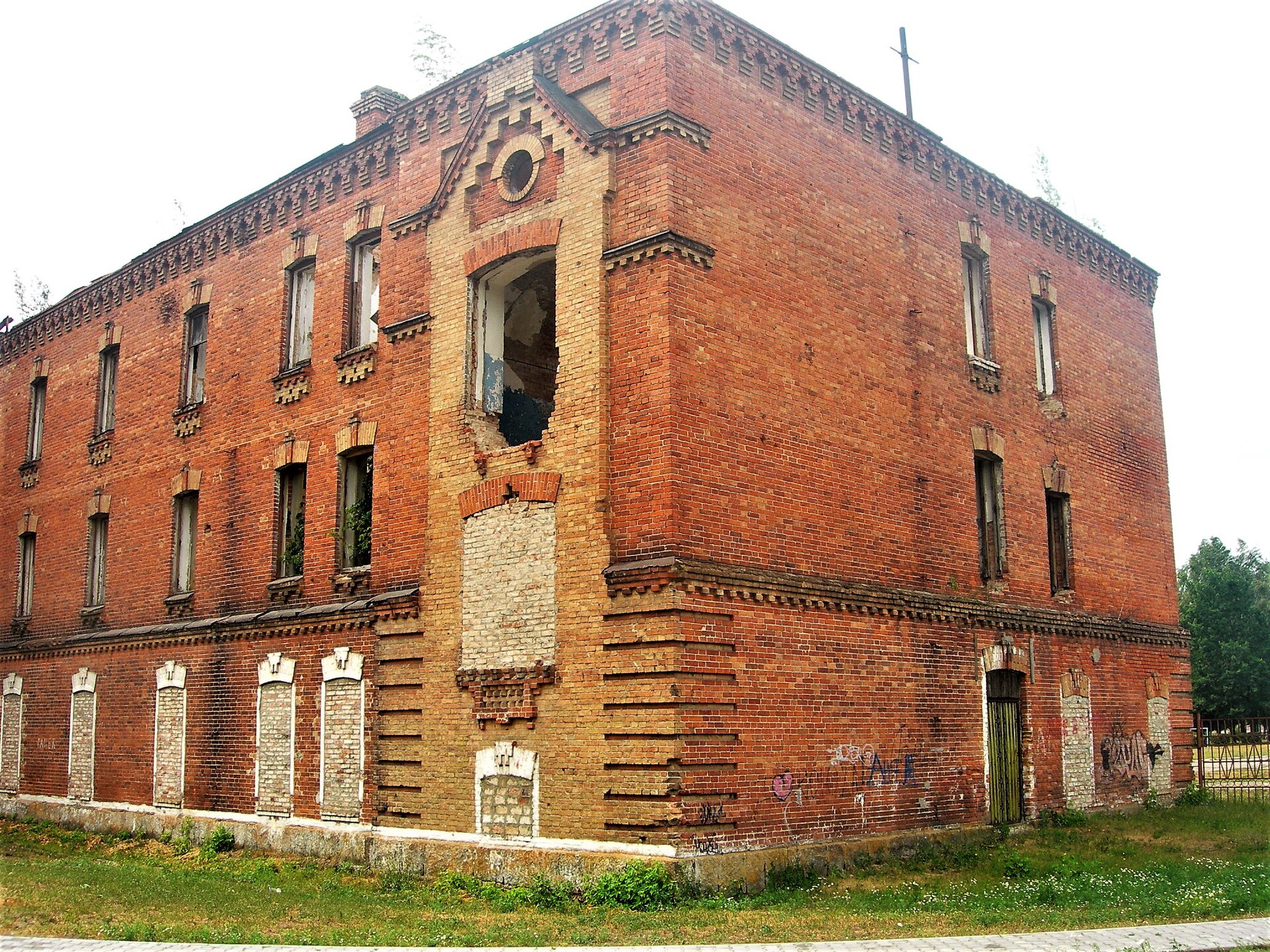
Main building of the Bereza Kartuska concentration camp, in which a lot of Ukrainians and Belorussians did not have a good time.
If you are a westerner reading this, try to put yourself in the shoes of a young Ukrainian in the 1930s. You have no state, your people to the east are being starved to death by the millions by the Soviets, and your people to the west are being culturally suffocated and displaced by Polish upper class. You feel entirely abandoned by the world.
What happens to a stateless, traumatised, and desperate people pushed to the absolute brink? Well, obviously they radicalise. Still, even with all of this in mind, it will be difficult to comprehend what happens afterwards.
This environment of extreme oppression and desperation became a fertile breeding ground for ultra-nationalism. It led directly to the creation of the Organisation of Ukrainian Nationalists (OUN), and later its military wing, the Ukrainian Insurgent Army (UPA). Their ideology was simple: a free and independent Ukraine must be achieved at absolutely any cost, and anyone who stood in the way, whether they be Soviet, German, or Polish, had to be eradicated. Exterminated, systematically.
Even other Ukrainians who showed mercy to any of their opponents would not be spared from summary execution by UPA. What UPA did next would make the Cossacks look like saints in comparison.
Extermination of everyone
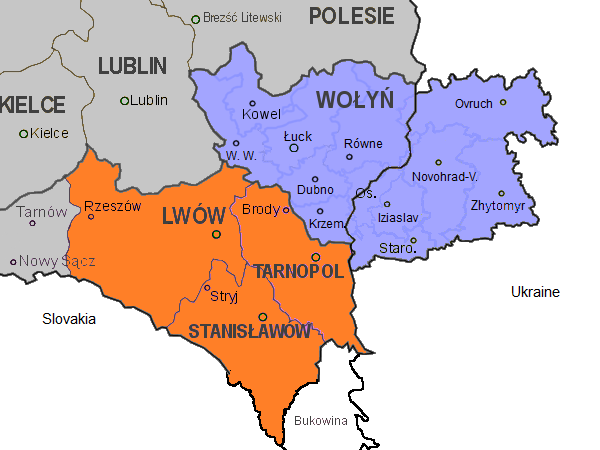
What followed was the Volhynia Massacre, a campaign of systematic ethnic cleansing carried out by the UPA between 1943 and 1945. Their goal was incomprehensible to the human mind: to entirely purge Volhynia and Eastern Galicia of non-Ukrainians so that, when the war ended, Poland could lay no demographic claim to the land.
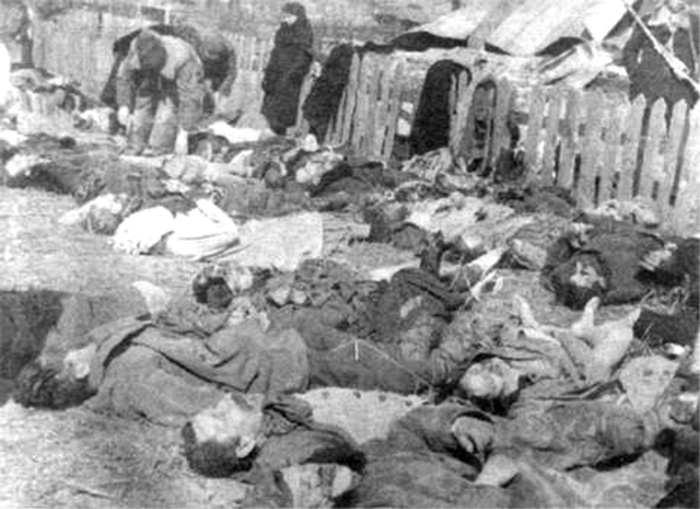
Polish civilian victims of massacre committed by UPA, assisted by ordinary Ukrainian peasantry in the village of Lipniki (1943).
Because ammunition was scarce and expensive, the UPA rarely used firearms for these mass executions. Instead, they relied on agricultural tools. Polish civilians, who were mostly women, children, and the elderly, were slaughtered using axes, scythes, pitchforks, and saws. In early massacres, such as in the village of Parośla, UPA fighters convinced Polish residents to let themselves be tied up under false pretenses, only to butcher them all with axes, including infants. Entire villages were looted and burnt to the ground to ensure no survivors could return.
The undisputed climax of this barbarism occurred on 11th July 1943, a date remembered in Polish history as “Bloody Sunday”. In a coordinated operation, UPA death squads simultaneously attacked approximately 100 Polish settlements across Volhynia.
They chose Sunday morning for a specific reason, no doubt inspired by Satan himself: they knew the Polish population would be gathered inside their Roman Catholic churches for Sunday Mass. In places like Kisielin and Poryck, UPA militants surrounded the churches, threw grenades through the windows, and opened fire on the screaming congregations. Those who tried to flee through the doors were hacked to death with axes, while others were burned alive as the churches were set on fire and collapsed on top of them. In Poryck alone, roughly 200 parishioners were murdered alongside their priest, who was killed while standing at the altar.
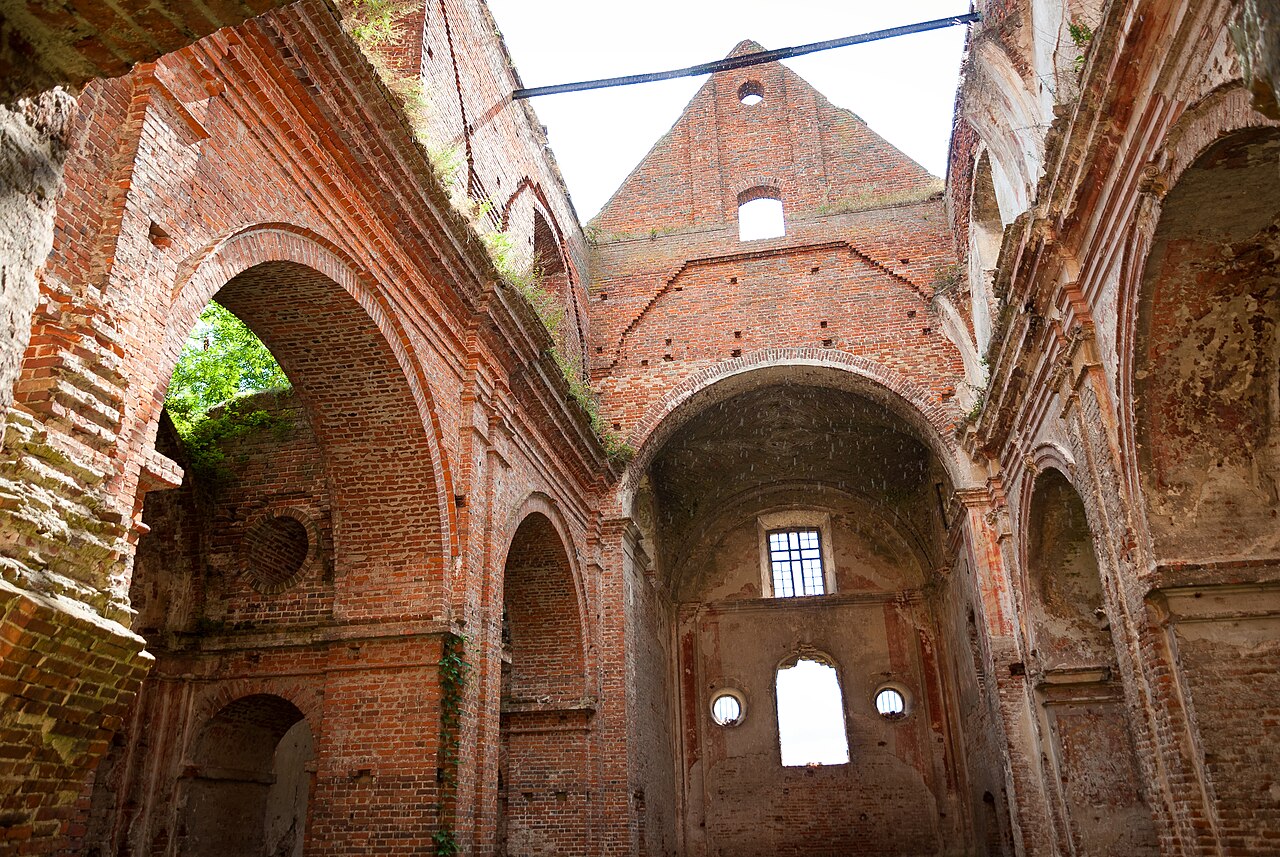
The Kisielin massacre was a slaughter of Polish worshippers on 11 July 1943 during a Sunday Mass.
By the end of the slaughter – which actually ended only in 1945 when Soviets have regained the territory – roughly 100,000 Polish civilians had been murdered. UPA forces also ruthlessly murdered thousands of Armenians, Jews, and even their own fellow Ukrainians who refused to participate in the slaughter or who dared to shelter their Polish neighbours.
I have deliberately left out many details. There are entire books on this subject, detailing the testimonies of people who have witnessed women having their newborns ripped out of their bellies, with the newborn being impaled on piked fences. One of such people was the mother of a co-worker at a place I used to work at. In my town of Zambrów, Ukrainian SS soldiers from the Galician unit were stationed to keep watch over Polish slave labour at the train station in the 1940s. My grandmother saw this personally.
Dr. Aleksander Korman who has done extensive studies on the massacre has published a list called “362 ways to murder Poles”. As the name suggests, it is a list compiling most (not all) of the known methods, according to witness testimony, in which Poles were murdered at the time.
More about this can be read on https://volhyniamassacre.eu/. There is also a film produced by Wojciech Smarzowski called Volhynia which was a macabre, but true, dramatisation of the event. Only those with strong nerves should watch.
Ukraine today
So far, we have only detailed the Polish side of the story. What was just covered is horrible and no doubt disturbing, but what about Ukraine? How do they rationalise OUN, UPA, German occupation, Soviet occupation, and all the rest?
Well, as it turns out, my mother has worked since the start of the Russian invasion of Ukraine in 2022 with refugees in Norway. As such, she has intimate knowledge of exactly how educated the average Ukrainian citizen is on this subject. She has been in contact with good and bad refugees, and, when appropriate, asked them about the Volhynia Massacre. Not in any snide and judgemental way, but a simple question to a friend: what did your society teach you about this important event, even if it might reflect poorly on your nation?
Without going into excruciating detail about every single example, we will just pick the most average one. One of the refugees, Vova, actually ended up being a pretty good friend of my mother. He is a simple man, but honest and conscientious who works hard in Norway to send his earnings to his wife in Poland. Funny thing is that he did not even come from Ukraine, he came from Poland, but that’s a different story.
When my mother asked him what he was told about the Volhynia Massacre, he explained that he learnt about it from his grandmother when he was young.
So, what did he learn? It’s quite simple: the massacre was perpetrated by Soviets, who disguised themselves as UPA soldiers.
Oh.
Vova is not an exception, but the rule. Most Ukrainians do not even comprehend the truth about the situation. Some of them do not even know such a thing happened, whether disguised Soviets or otherwise. Less well-meaning Ukrainians outright lie about it, such as Volodymyr Zelensky himself. Former Polish President Andrzej Duda was told, by Zelensky, that Zelensky never knew about the massacre until Duda raised the topic. The Russian Ministry of Foreign Affairs explains in succinct detail that this is extremely unlikely, since Soviet curriculum at the time when Zelensky was in school contained books about this topic. Zelensky, go back to class.
Poland today
Another question that is slightly less obvious, but nevertheless worth talking about, is what about Poland today? I think a lot of westerners were shocked not just by the depravity and brutality with which UPA acted in the 1943-45 period, but also the fact that somehow Poland never seemed to have mentioned it. It just kind of escaped public conscience in the west all these years, revealed only in 2026 with a media bang.
After all, Poland has been in NATO since 1999 and in the EU since 2004. It has been a firm western partner for well over 20 years, pretty much since the collapse of the Soviet Union and Warsaw Pact. During this time, did you guys really never learn anything about this horrible event? Battle of Britain, Boer concentration camps, Spanish Civil War, Japanese concentration camps in the US, but not this?
The simple answer is that the Poles have learnt to live with this. Although the Volhynia Massacre is unprecedented in a lot of ways in Polish history, in the grand scheme of things this kind of oppression was nothing new to the Polish people. Though the Russians and Prussians never did anything quite on the scale of the Volhynia Massacre, they weren’t exactly kind to the occupied territories of Poland either.
More to the point, we recognise Ukrainians as the Cossacks. Therefore, we kind of just understand, maybe even expect, that it is in their nature to do things like this. Yes, really, that’s the explanation. Even with all of what was just explained, it still might sound incomprehensible, but Poles are good at keeping a stiff upper lip. We go forward with the kind of tenacity that the western mind simply cannot understand.
We never forgot Volhynia 1943-45 and we never will, but we are ready to forgive. We are even ready to forgive Ukrainians for all they have done, but the essential component for forgiveness is repentance. Otherwise you are not really forgiving, just making yourself a doormat. Those are two different things, and the entire world needs to understand that Poland is not a doormat. Poland will not forgive what happened in Volhynia until the Ukrainian government repents.
Are Poles hypocrites?
Throughout the past few weeks, I had the privilege of witnessing, both through social media and media outlets from various countries, what the opinions are on this issue. Most importantly, I have seen a lot of Ukrainian comments, both from ordinary people and government officials, insinuating that we are equally responsible for Ukrainian misery. The lynchpin of this argument is Józef Piłsudski and his rule in the 1920s and 1930s. Let’s talk about this. Are Poles hypocrites?
Stepan Bandera
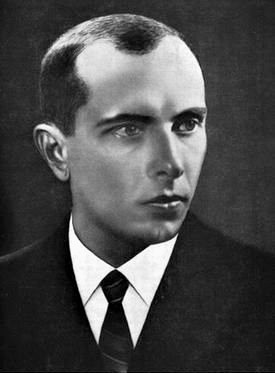
Before we can begin talking about Piłsudski and his rule, it is important to establish exactly who the leader of the ONU and UPA was. His name was Stepan Bandera and he is the central figure in this entire modern dispute. We must look at what Bandera actually believed and did.
According to the Polish Institute of National Remembrance (IPN), Bandera, born in 1909, grew up in a patriotic atmosphere but rapidly developed into an uncompromising, fanatical extremist. He joined the clandestine OUN in 1929. The OUN operated under a “Decalogue of a Ukrainian Nationalist,” which included chilling commandments such as: “You will not hesitate to commit even the greatest crime, if the good of the cause demands it,” and “With hatred and deceit you will treat the enemies of your nation”.
For Bandera and the OUN, any attempt at peaceful coexistence or compromise between Poles and Ukrainians was considered a mortal threat. They believed in a “permanent revolution”, involving intentionally using violence and terrorism to destabilise the region, aiming to prevent any normalisation of relations. In essence, normalisation was seen as high treason and murder as the ultimate goal.
By 1933, Bandera became the head of the OUN’s national executive. He personally selected assassins and orchestrated a campaign of terror. Who were his targets? Not just Polish officials, but also moderate Ukrainians. For instance, in 1934, Bandera’s men assassinated Ivan Babiy, a respected Ukrainian high school principal and patriot, simply because Babiy tried to prevent the OUN from spreading radical propaganda to his students to protect them from police reprisals.
That same year, Bandera masterminded the bold assassination of Poland’s Minister of Internal Affairs, Bronisław Pieracki. Remember when we mentioned Piłsudski establishing the Bereza Kartuska concentration camp? It was the direct consequence of Bandera’s assassination of Pieracki. The Polish state’s harsh crackdowns in the 1930s did not occur because Piłsudski decided he actually hates Ukrainians now. He was desperate. In his mind, a heavy-handed response to an unrelenting campaign of assassinations and sabotage was needed. Most of us would do exactly the same in his place.
When World War II broke out, Bandera’s faction of the OUN (OUN-B) fully aligned itself with Nazi Germany. At a 1941 congress, his followers officially adopted fascist principles, the black-and-red flag and the fascist salute. In May 1941, Bandera drafted a manifesto for a “Ukrainian national revolution,” explicitly stating: “Our rule will be terrible for our opponents. Terror for enemy aliens and our traitors”. Following the German invasion of the Soviet Union, Bandera’s followers organized massive pogroms against Jews in Western Ukraine, shouting slogans like: “Long live Adolf Hitler and Stepan Bandera, death to the Jews and the Communists”.
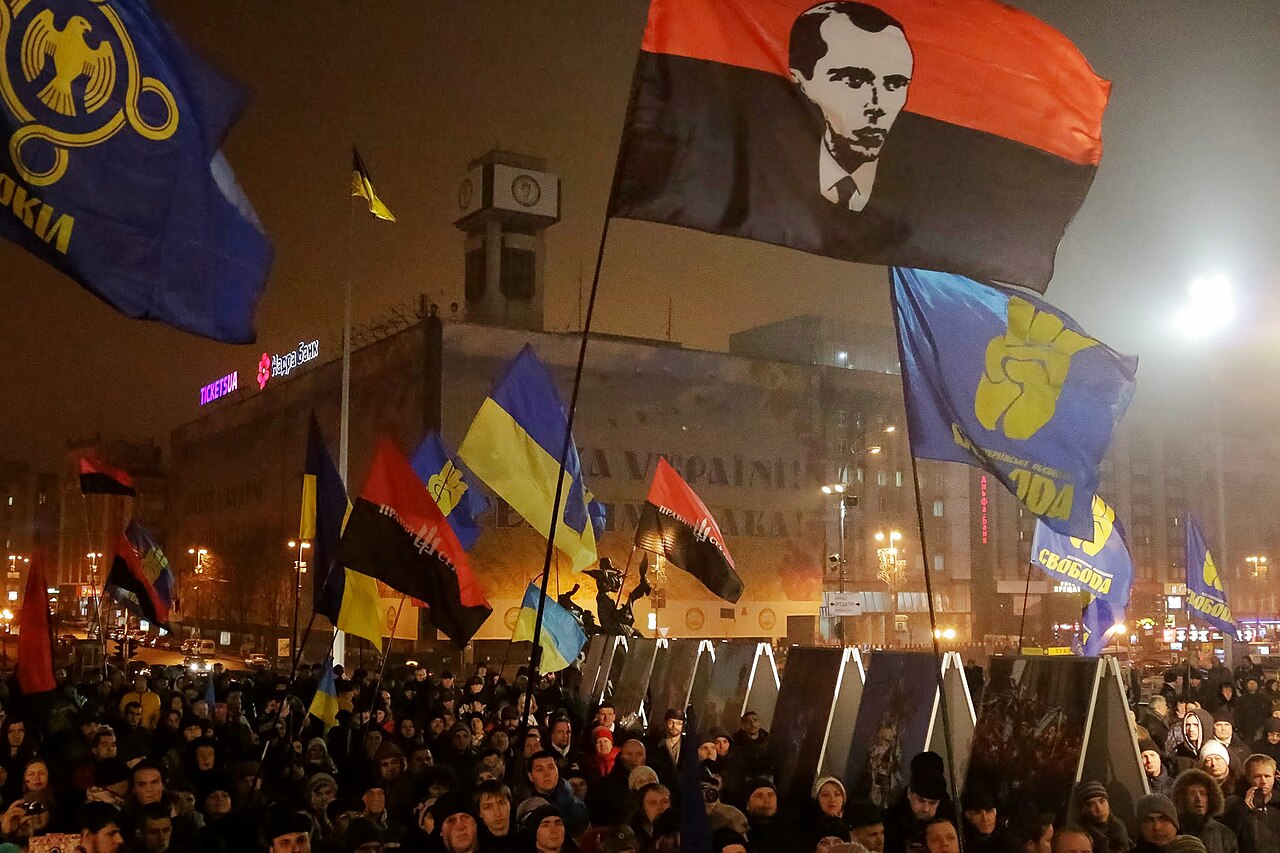
Procession in honour of the 106th anniversary of the birthday of Stepan Bandera (Kyiv, 2015)
Eventually, Bandera overplayed his hand by declaring an independent Ukrainian state without Hitler’s permission. The Germans arrested him, but he was not sent to a labour camp to toil in agony like millions of others. Instead, he was held in Zellenbau, a VIP bunker in the Sachsenhausen concentration camp. There, he had a furnished two-room suite, ate his meals in the SS dining room, wore civilian clothes instead of prisoner garb, and was permitted to communicate with the outside world.
It was during his comfortable imprisonment that his followers, acting on the ideological blueprint he created, launched the Volhynia Massacre. While Bandera might not have personally swung the axes that butchered Polish infants, he bears total moral responsibility for the genocide. He built the machine and pointed it at the Poles and Jews. Most critically, he never once condemned the slaughter. However, Ukrainian officials to this day maintain that Bandera was not culpable in this event, because he was imprisoned at the time. Kind of like saying a warlord is not responsible for the armies he equipped because now he is in prison for being a warlord.
After the war, Bandera lived in West Germany, adapting his politics to the Cold War to work with British intelligence, MI6. He lived a free man until the KGB assassinated him with a cyanide spray gun in 1959.
Because he was murdered by the Soviets, he was instantly transformed into a martyr for the national cause. To this day, he is revered in western Ukraine as a hero of national liberation. In 2010, the Ukrainian government even briefly awarded him the title of “Hero of Ukraine”. Sound familiar? Ukraine has many streets named after Bandera.
So, when Ukrainian commenters point to Polish oppression in the 1920s and 1930s to justify the UPA, it is crucial to understand the timeline and the nature of what organisation it is that they are holding in high regard.
Remember, part of the initial justification of Russia invading Ukraine in 2022 was “denazification.” Most people did not understand how this justification made any sense. Sure, there was the Azov Battalion with its Black Sun, Wolfsangel, and other SS-related imagery, but that was just for show, right? I won’t be getting into that here, but now it should be all the more clearer what the Russians actually thought of Ukrainians prior to 2022. Russians are intimately familiar with Stepan Bandera. Many of his victims were Russian, too.
Józef Piłsudski
When Ukrainian commenters point the finger at Józef Piłsudski as responsible of their ancestors’ misery, they are demonstrating a tragic misunderstanding of their own history.
As was mentioned earlier, Piłsudski was not a Polish imperialist who wanted to rule over foreign ethnicities. He understood that a Poland packed with hostile minorities would be intrinsically weak. His ultimate goal, his life’s dream, was the Intermarium. In 1920, he even signed an alliance with Ukrainian leader Symon Petliura, and Polish and Ukrainian troops fought and bled together to secure an independent Ukraine. Unlike Bandera, Petliura was more of a cool guy, although still responsible for some Jewish pogroms.
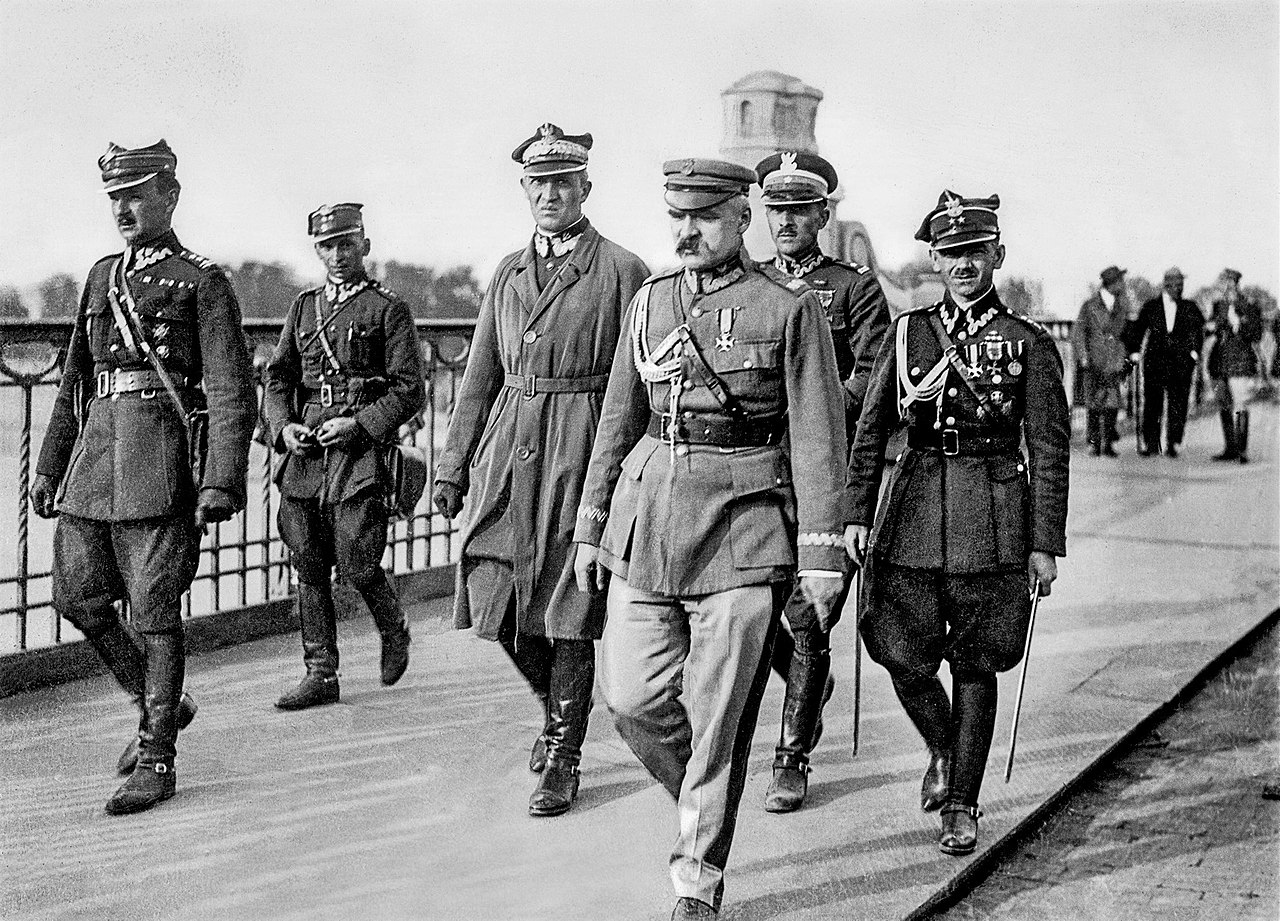
It was only when Piłsudski’s political rivals, the National Democrats, usurped the peace negotiations in 1921 that this dream was killed. After the war, Piłsudski did not return to become the iron-fisted de facto ruler of Poland until 1926. Seeing the young Polish republic tearing itself apart with corruption and political gridlock, Piłsudski orchestrated a military takeover known as the May Coup. He established a political movement called “Sanacja” (Sanation, meaning “cleansing” the state). It was during this period that Piłsudski truly became a dictator. He had no patience for political opposition, orchestrating nasty purges of his political enemies, censoring the press, and, yes, locking up dissidents, both Polish and Ukrainian alike, and the Belorussians.
But here is the most crucial part that Ukrainian nationalists seem to ignore: by the time Piłsudski seized absolute power and became the undisputed Marshal of Poland, it was simply too late to do anything about Ukrainian sovereignty, or Belorussian sovereignty, or any other kind of sovereignty. The borders of Europe had been ratified by international law. The Soviet Union had consolidated its horrifying power to the east. For Piłsudski to carve an independent Ukraine out of Polish and Soviet territory in the 1930s would have required launching a suicidal war against the USSR, a war that surely would have wiped Poland off the map. In such a case, everyone loses, including Ukraine.
Piłsudski’s hands were tied. What was he supposed to do, exactly? He needed to keep the Polish state completely stable to survive the growing threats of Germany and the Soviet Union.
So, how did Stepan Bandera and his OUN react? Did they bide their time, gather strength, and work diplomatically to prepare for a future conflict with the Soviets? No. They threw a tantrum.
In the end, Bandera’s ultra-nationalist terrorism achieved absolutely nothing for Ukrainian independence during the Interwar period. All he did was fracture Polish-Ukrainian relations beyond repair, destabilise the only nation in the region that could have served as a geopolitical ally, and fatally weaken the entire eastern flank. By ensuring that Poles and Ukrainians hated each other, Bandera essentially did Stalin’s job for him. He surrendered Ukraine to Soviet subjugation faster and far more effectively than the Soviets could have managed alone.
Even under this metric, Bandera was a complete failure for the Ukrainian cause. Even if we ignore his Hitler-worship, his Satanic desire for murder, and all the other horrible things: he simply was a low-IQ individual. He did not understand the basic political reality around him.
Lucjan Żeligowski
History is rarely completely black and white. Even if Piłsudski’s grand vision was noble and his hands were relatively clean, the people he employed to execute his policies could be ruthless, and their actions were far from innocent. If we want to have an honest conversation about hypocrisy, we should look at a Polish general named Lucjan Żeligowski.
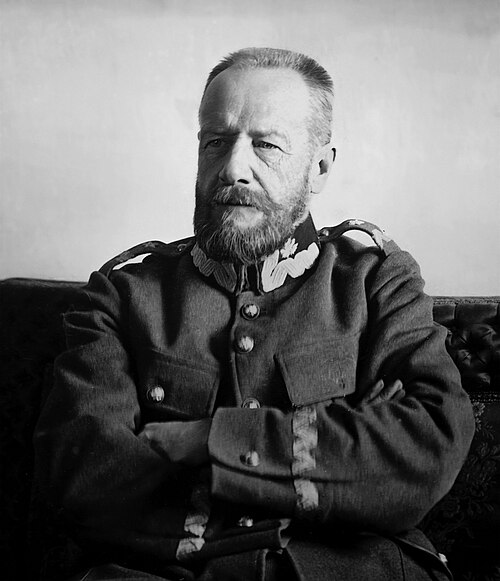
In 1920, the status of the city of Vilnius, Lithuania, became a massive geopolitical flashpoint. The city was historically tied to the Grand Duchy of Lithuania and was claimed by the newly independent Lithuanian state as its historic capital, yet its population at the time was overwhelmingly Polish. Piłsudski, who himself was born near Vilnius, desperately wanted the city within Poland’s borders but was constrained by international treaties and the watchful eye of the League of Nations.
To bypass this diplomatic gridlock, Piłsudski secretly authorised Żeligowski to stage a “mutiny”. In October 1920, Żeligowski and his 1st Lithuanian-Belorussian Division supposedly defied official Polish orders, marched into Vilnius, and launched an absolutely brutal, bloody military campaign against Lithuanian forces. By force of arms, Żeligowski carved out a piece of Lithuanian territory and established a puppet state called the Republic of Central Lithuania. Unsurprisingly, just two years later, this territory was directly annexed into the Second Polish Republic.
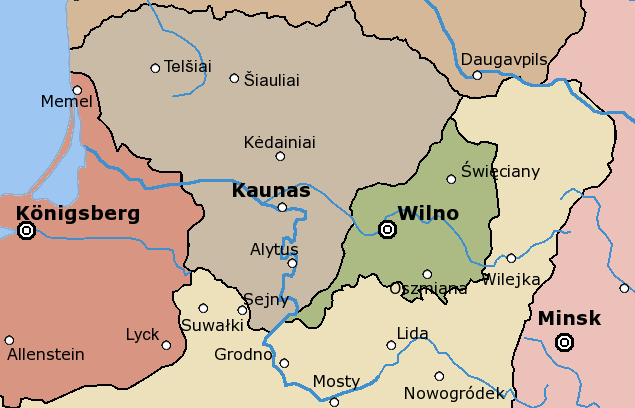
For tearing a piece of territory away from Lithuania through bloodshed, Żeligowski was highly rewarded by Piłsudski and the rest of the Polish military establishment. Piłsudski openly admitted to orchestrating the entire “mutiny,” and Żeligowski went on to enjoy a lucrative, celebrated military career, eventually becoming Poland’s Minister of Military Affairs.
However, this is where the crucial difference between Poland and Ukraine lies today. Lithuanians deeply suffered during Żeligowski’s campaign. A campaign that opened a bleeding wound that poisoned Polish-Lithuanian relations for decades. Poles acknowledge this. Because of this dark legacy, today we do not have any active Polish military units or grand national monuments named after Lucjan Żeligowski.
We do not glorify him. Why? Because we value our modern strategic alliance and friendship with Lithuania more than we value aggressively championing a controversial general who ran a bloody campaign. We generally do not like or celebrate the brutal nature of that mutiny, and the Polish state has deliberately chosen to let Żeligowski fade into the history books for the sake of good neighbourly relations.
This is the exact level of historical maturity and basic diplomatic respect that Poland is currently asking of Ukraine, regarding UPA. We are not hypocrites. We practise what we preach.
Conclusion
To the western friend who has made it this far, I hope this cursory journey through the centuries has helped illuminate why Eastern Europe operates the way it does. When you see a diplomatic crisis between Poland and Ukraine on your news feed, you are not just looking at a contemporary political disagreement over military aid or border crossings. You are looking at the outlines of the Polish-Lithuanian Commonwealth, the Cossacks, the shattered dream of the Intermarium, and so much more that we haven’t even covered.
Make no mistake: Poland wants Ukraine to win its war against Russia. Our President, despite the tensions, has stressed multiple times he is not reneging on the strategic commitment. We were the first to rush to their aid in 2022, emptying our military reserves and opening our homes to millions of refugees. We did this because we thought that all was forgiven.
However, our unprecedented support is not a blank cheque for worshipping Hitler, nor is it a mandate for Ukraine to spit on the graves of our ancestors.
By officially honouring the UPA, and by treating the rescinding of the Order of the White Eagle as a petty joke to be returned via a consumer courier, Volodymyr Zelensky and his government have made a colossal miscalculation. They have mistaken Polish solidarity for weakness. They have forgotten that true alliances cannot be built on a foundation of mass murderers. We are not stupid.
A nation must choose its heroes carefully. Ukrainians can choose to draw inspiration from their brave soldiers currently holding the line in the east, or even from the audacious Cossacks. Instead, for reasons we don’t really understand, they choose the fascist legacy of Stepan Bandera and the UPA. They are actively alienating their greatest ally and poisoning their own integration into the Western world.
We Poles are not asking for much. We are simply asking for the truth to be acknowledged, for the victims of the Volhynia Massacre to be exhumed and given a proper Christian burial, and for the state-sponsored glorification of their murderers to cease. None of us will stop until this happens.
The choice is theirs. But they, and the rest of the world, should know this: the Polish people have a very long memory, and we will never be anybody’s doormat.
Hope this helps.