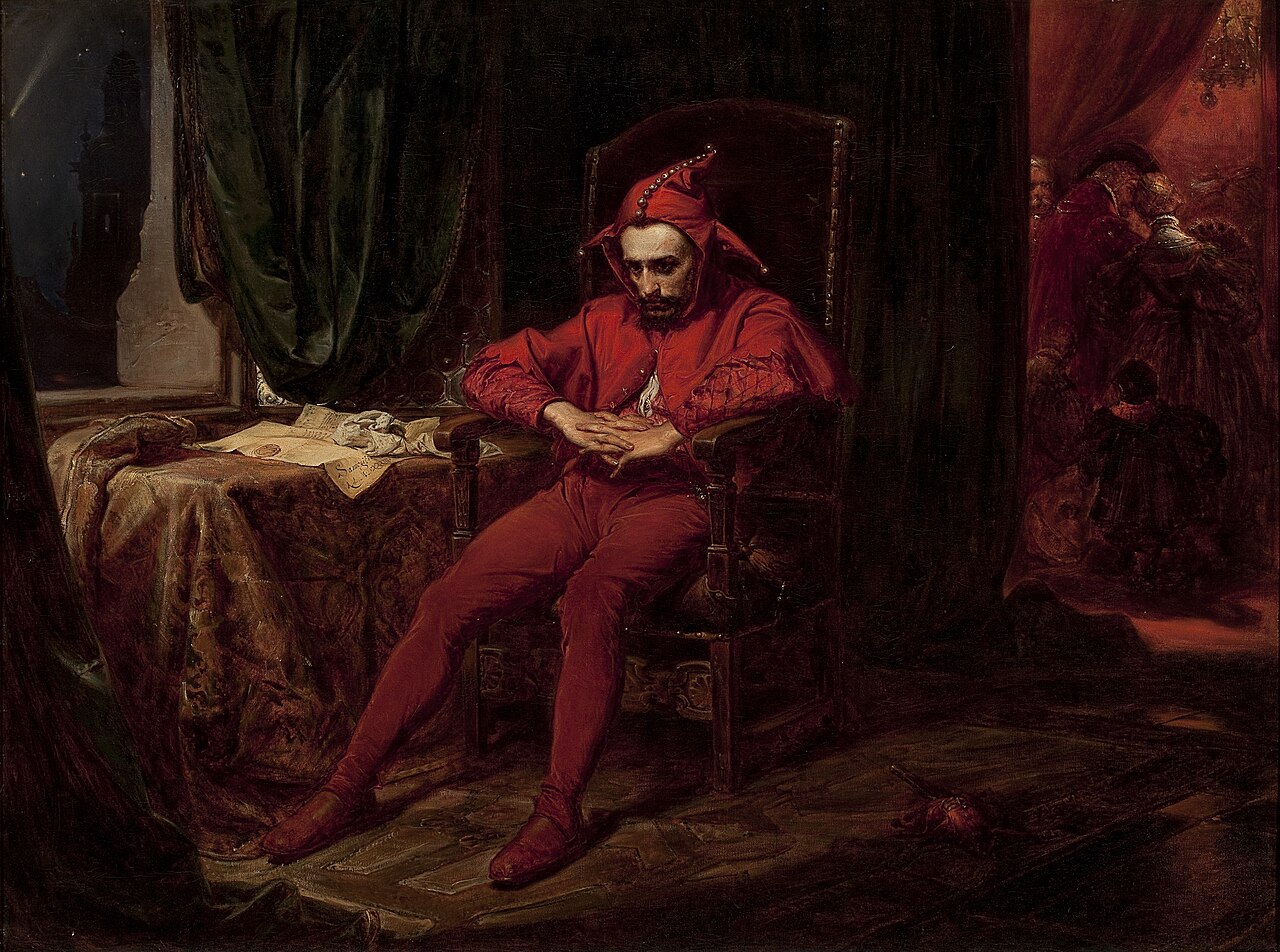
The blue light of the laptop screen was the only thing illuminating the room, casting long shadows that clung to the corners like old doubts. He scrolled through an endless feed of algorithmic sludge: vacant smiles selling products he didn’t need, recycled outrage over issues he couldn’t fix, and shallow promises of liberation that looked suspiciously like a subscription fee. It was a river of noise, and he had been drowning in it for years. With a quiet click, he closed the laptop, plunging the room into a heavy, waiting darkness. He was in his early twenties, and the silence that followed felt more honest than anything the screen had to offer. Where to even begin?
His gaze drifted across the room, cataloging the monuments to his own exhaustion. On the bookshelf, the glistening covers of self-help guides offered hollow affirmations he no longer believed. A thin paperback Bible, given to him during a brief flirtation with a welcoming but ultimately toothless Protestantism, sat unused, a bookmark placed halfway through the Gospel of John. Tucked beneath a stack of old textbooks was a more severe, black-spined book whose ideology had promised order and strength, only to leave the taste of bitter ash in his mouth. Each one was a tomb for a dead idea, a husk of a promise that had failed to deliver him from the gnawing emptiness.
His disillusionment drove him deeper into the digital catacombs, past the surface-level noise and into stranger warrens of the internet. A series of well-timed messages and obscure URLs led him down a rabbit hole that ended, unexpectedly, at the doorstep of an Eastern Orthodox Church. He bypassed the familiar sign of the Roman Catholic Church, which felt like part of the world he was leaving, and sought something older. He found it in the onion dome of an Orthodox parish. This, the Internet had promised, was the real thing: the apostolic church where laity still drank the blood of Christ.
A year of catechesis later, he was baptised and came under the wings of a father confessor. The father confessor was not perfectly capable of receiving someone of a non-believing background, but the confessor’s young age was a major asset. “You got to be careful,” some of his early counsel started. “At first the Church will appear beautiful and everything will seem perfect. But faith is like being shown around a palace, only to get a look at the palace. You will be ejected, and you will have to build your own palace. Brick by brick, slowly, over time.”
Just like before, there was no way the young man could possibly know what was in wait for him, so he did not comprehend the full gravity of what his father confessor just told him. “I understand, batushka,” is all he could say. "…even those who do not yet believe." The young man had confessed as much, and the priest had accepted the challenge. It was understood that the father confessor could offer spiritual advice only on a best-effort basis, but ultimately the goal of the Church is to save everyone, even those who do not believe.
As teenage foolishness would have it, the man decided that he could apply the worldly principle, of faking it until he could make it, to his faith. Reading the New Testament, regularly watching patristic content on YouTube, and praying all the prayers in the prayer book. This was all an exercise in futility, however, as evidenced by his heightened anxiety, which would never go away. Trying to force belief, where there is none, is not advertised in the New Testament.
The father confessor saw this tired look on the man’s face and understood that the approach did not work. “As someone who was raised Orthodox, I cannot say I understand your situation,” the confessor said to the man. “The best I can do is try to understand your situation, as someone who is not raised Christian, let alone religiously. What I can tell you is this: just take it easy, alright? Your spiritual situation is good. The humility is there. If you sprint your way through this, you will tire, and fall behind, and lose interest in Orthodoxy.”
The man nods. “I understand, batushka,” is all he can muster.
He took the father confessor’s advice to heart, but not in the way one follows a prescription. He simply stopped. The prayer book on his nightstand remained closed, now remembering a handful of brief prayers. His YouTube history, once a relentless stream of patristic sermons and monastery tours, became barren. This wasn’t an act of rebellion or sloth, but one of exhaustion and, finally, of surrender. He stopped trying to build his palace brick by brick, because he realised he didn’t even know what a brick was.
His presence in the Church changed. Before, he was an anxious participant, his mind racing to keep up with the litanies, trying to force a feeling of piety that would not come. Now, he was merely present. He stood in the back and let the Divine Liturgy wash over him. He watched the way the light from the high windows caught the smoke of the incense, turning it into a shimmering, golden veil before the Royal Doors. He listened to the chants, not trying to decipher the words, but feeling their ancient vibrations in the mortar and in his own chest. The faith was no longer a puzzle to be solved in his head, but a reality to be witnessed with his senses.
This year of quietude was a slow, methodical unraveling. All the things he had mistaken for himself – his political opinions, his intellectual pride, his desperate need for answers, even the very anxiety he wore like a second skin – began to feel thin, like old parchment. They were the noise that had prevented him from hearing the Word. He wasn’t building a palace. He was clearing away the rubble of the one he had built for himself, a cheap imitation that had blocked the sun. The sprinting had stopped, and in the silence that followed, he found he was already home. It was not a discovery made in a flash of insight, but a slow dawning that the man who had walked into the church a year ago was simply no longer there.
A year later, the man contacts the father confessor to arrange a meeting. Not knowing what to expect, the confessor finds time on a busy Saturday to meet in his cabinet.
They sit down.
“What is it that you want to speak with me about today?” the father confessor begins invitingly.
“What is said about seeing God in the Gospel?”
Taken slightly aback by such a deep theological question right out of the gate,
the confessor thinks for a moment. “You die if you see Him. You cannot look at
Him and continue to be alive in this world.”
The man sighs. “Well, I died yesterday.”
The confessor looks at the man for a moment, not sure if it is a joke delivered in a deadpan way, if something is disturbed about the man, or something else entirely. The man is definitely not disturbed. If anything, evaluating the man’s demeanour more critically, there seems to be something almost tranquil about the man’s presence.
The father confessor leans in. “What do you mean by that?” he queries,
reluctant to make any assumptions. “You seem alive and well right in front of
me.”
The man smirks and chuckles. “Oh, no, I know I am being a bit blunt, but I
mean that completely seriously. I’ll try to explain as best as I can: I don’t
think I mentioned this to you before, but I had this idea in my mind for a
while about what it would actually mean to believe in God.”
The man carries himself in a way that the father confessor has never seen before. Where before the youthful vagaries were clear in his mannerisms and speech, now it is piercing and razor-sharp. “To believe in Him means that everything becomes Him. He is the Word. He is the Light, that fills your soul. But what that means in practice that we, as infinitely complex beings, consist of more than just… this body. It’s our relationships with one another; with family; with friends. Our desires, our dislikes, our favourites, or what we find important. If you believe in God, then all of that flies out the window. What could possibly be anything more important than Him?”
Father confessor is visibly moved by this revelation. Thinking a little about
what to say next, he responds to the man. “I have not heard that before.
Interesting. Variations of that, maybe, but not this.” The confessor pauses
once again. “Does that mean that you believe?”
“Yes.”
“How did that happen? What– Well, did God really reveal Himself to you?”
The man lets out a short, soft breath that is almost a chuckle. He shakes his head slowly. “Reveal? No, batushka, not like a vision. It wasn’t a light shining down from the clouds. It was more like… an excavation. He didn’t show me something new. He just took everything else away.”
He leans forward, his eyes fixed on the confessor, but also looking through him. “You know that for the past year I have been just… existing. Attending the Liturgy, saying my prayers, but mostly just trying not to sprint, as batushka said. I had a job, a normal life. I was even seeing a woman. Things were quiet. I had built a small, manageable life. It was a compromise. I told myself it was humility, but it was really just a carefully constructed peace. A lie, you know.”
The man’s voice remains level, almost unnervingly calm, like a witness describing an event he has already replayed a thousand times. “Last Tuesday, my brother died. An overdose. He was the one person from my old life who I still… who I still felt a duty to save. I spent years trying to fix him, to manage his problems, to be the ‘good’ brother. It was the last piece of my old ego, you know? The identity of the rescuer. And when I got the call, I went to his apartment. I saw him there. Hanging, from the noose. And in that moment, seeing him lifeless, I felt absolutely nothing. Not grief. Not anger. Just a profound, horrifying emptiness. All my efforts, my worries, my ’love’ for him… it was all just scaffolding for my own pride. It had amounted to nothing. His death didn’t just take him; it took the last story I was telling myself about who I was.”
“I drove home. I sat in my apartment, and the silence was absolute. My career, my relationships, my desire to be a good Christian, my love for my brother… it was all ash. There was no ‘me’ left to feel sad. And in that void, in that absolute zero… He was there. Not as a person or a feeling, but as the only thing that was real. The Light from the window. The wood grain of the floor. The very act of breathing. It wasn’t that God appeared in the room. It was a veil, that was lifted, revealing that God had been there all along. And the only thing preventing me from seeing it… was the man who thought he was living in the room. So yes, that man died yesterday.”
The silence in the small cabinet becomes heavy, thick with the unsaid. The father confessor, who has spent his life dispensing words of counsel and comfort, finds he has none. He slowly leans back in his chair, the slight creak of the wood the only sound in the sudden silence. He breaks eye contact with the man, looking down at his own hands, folded on the desk, as if confessing something truly embarrassing to his bishop. He has to squint a bit, with the summer sunshine flooding the room brighter than ever. The curtains are unfurled. The birds seem to be chirping prettier melodies than usual.
He clears his throat, but the first words that come out are little more than a whisper. “I… I am so sorry for your brother.” He says it not as a platitude, but with a sense of awe, as if acknowledging a terrible and sacred sacrifice. He looks up again, and his professional composure is gone. In its place is a raw, undisguised vulnerability.
“We priests,” he begins, his voice shaky, “we read the Holy Fathers. We study the canons. We learn the right words for the right sorrows. We talk about the Tollhouses as if it’s a chapter in a textbook. We tell people, just as I told you, to build their palace, brick by brick.”
He shakes his head, a small, slow gesture of defeat. “But you… you did not build a palace. You had everything torn down to the bedrock, and you found that the bedrock itself was the palace. All of it. The whole time.”
The father confessor pushes his chair back and stands, the meeting feeling abruptly over. He walks towards the door, his steps heavy. He places his hand on the brass handle, but doesn’t turn it. His back is to the young man. For a long moment, he is just a silhouette against the dark wood of the door.
Then, slowly, he turned his head, just enough to look back at the man. He asks the question that has been buried in his heart for a lifetime, the question he was perhaps too proud or too afraid to ever voice. His voice is quiet, stripped of all authority, like the simple inquiry of a layman.
“What is that like?”